
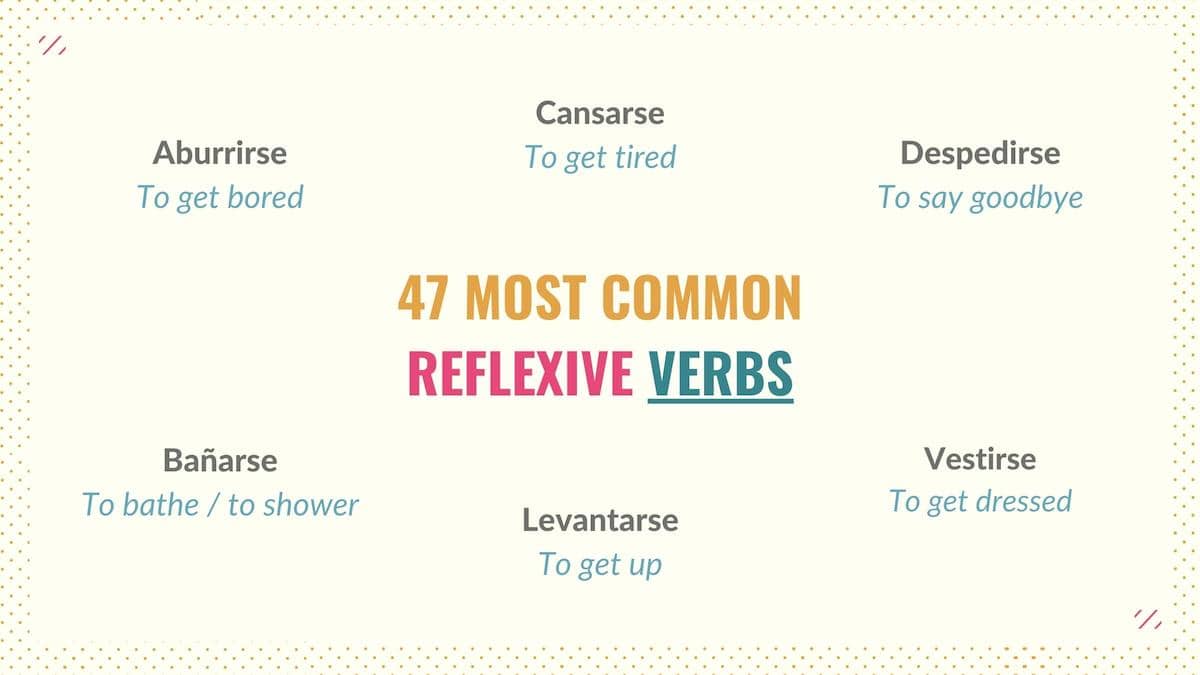
When learning reflexive verbs, people often want to identify all the verbs that follow this pattern. If you’re going through the same process, in this article, you’ll find a list of the top reflexive verbs in Spanish.
Here is a quick overview of what we’ll cover:
- 23 Must-Know Reflexive Verbs
- 24 Common Reflexive Verbs in Spanish for Daily Routines
- Verbs that Change their Meaning in Reflexive Form
- Download the Top Spanish Reflexive Verbs PDF
Before we start, I wanted to give you a little word of caution.
There are hundreds of reflexive verbs in Spanish. However, this is a curated list that contains the most common verbs you must know. And since they behave the same, this list of reflexive verbs in Spanish will also include a few pronominal and reciprocal verbs.
23 Must-Know Reflexive Verbs in Spanish
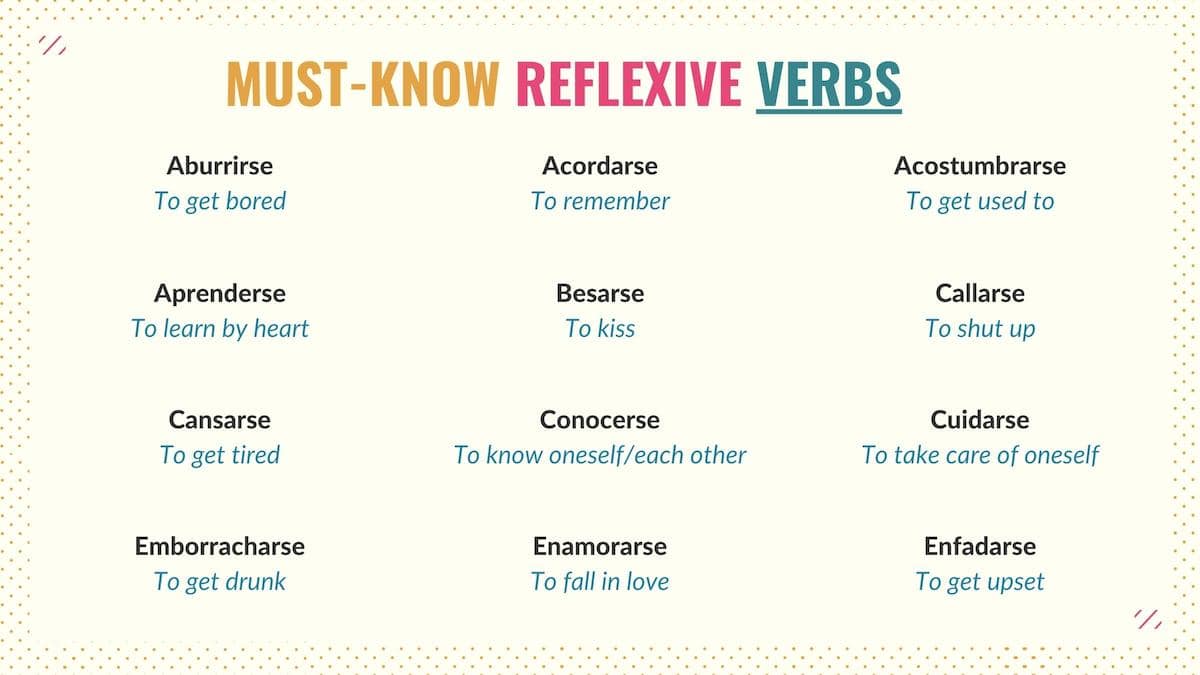
When starting to learn Spanish, many people assume that reflexive verbs are only used to talk about someone’s daily routine. However, you can use these types of verbs in other everyday situations.
Below is a list of common reflexive verbs in Spanish that you should learn:
- Aburrirse – To get bored
- Acordarse – To remember
- Acostumbrarse – To get used to
- Aprenderse – To learn by heart
- Besarse – To kiss
- Callarse – To shut up
- Cansarse – To get tired
- Conocerse – To know oneself/each other
- Cuidarse – To take care of oneself
- Emborracharse – To get drunk
- Enamorarse – To fall in love
- Enfadarse – To get upset
- Equivocarse – To make a mistake
- Despedirse – To say goodbye
- Imaginarse – To imagine
- Llamarse – To be named / To be called
- Moverse – To move
- Parecerse – To look like
- Pelearse – To have a fight with
- Pesarse – To weight yourself
- Quejarse – To complain
- Reírse – To laugh
- Sentirse – To feel
And here are some examples with these verbs:
¿De qué te ríes?
What are you laughing at?
Mis amigos no se acuerdan de tu nombre.
My friends don’t remember your name.
¿Cómo se llamaba la película que vimos?
What was the name of the movie we saw?
Take Note: In Spanish pronominal verbs always work with reflexive pronouns. Reflexive and reciprocal verbs are examples of pronominal verbs. Not all pronominal verbs express that people perform an action on themselves. For example, quejarse, despedirse.
24 Basic Reflexive Verbs in Spanish for Daily Routines
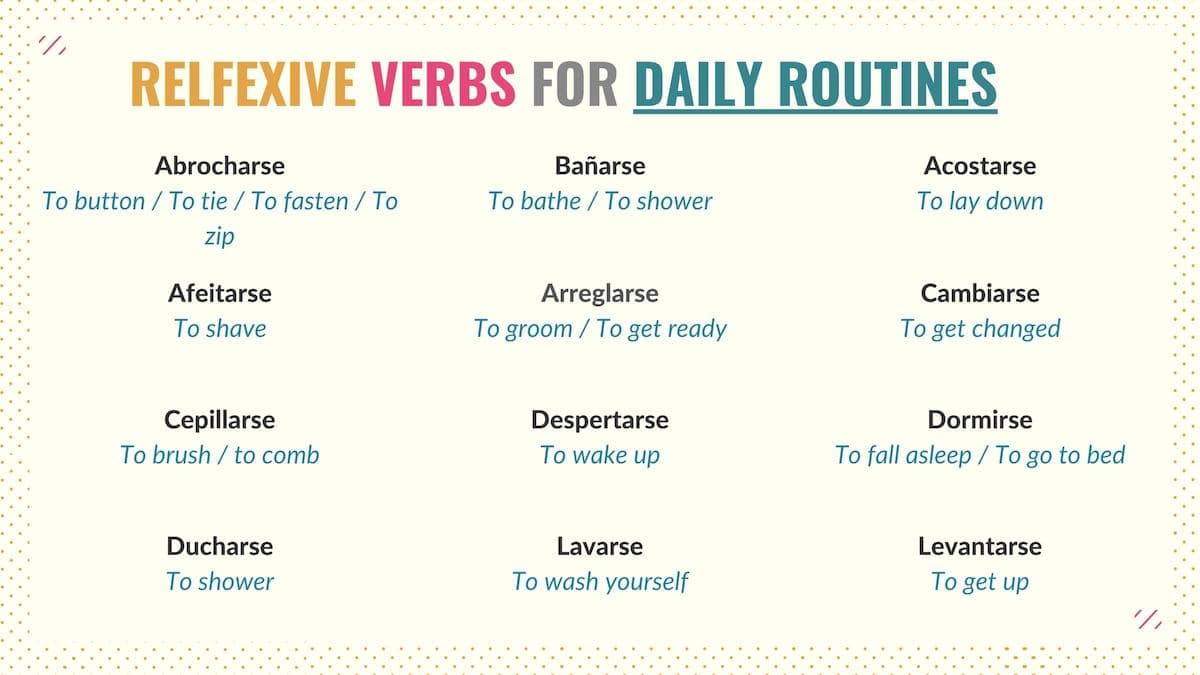
Basic reflexive verbs in Spanish are those verbs that you can use to talk about your daily routine. In the list below, you will find examples of these reflexive verbs:
- Abrocharse – To button / To tie / To fasten / To zip
- Bañarse – To bathe / To shower
- Acostarse – To lay down
- Afeitarse – To shave
- Arreglarse – To groom / To get ready
- Cambiarse – To get changed
- Cepillarse – To brush / to comb
- Despertarse – To wake up
- Dormirse – To fall asleep / To go to bed
- Ducharse – To shower
- Lavarse – To wash yourself
- Levantarse – To get up
- Limpiarse – To clean yourself
- Maquillarse – To put makeup on
- Irse / Marcharse – To leave
- Peinarse – To do your hair
- Pintarse – To put makeup on
- Ponerse – To put on
- Prepararse – To get ready
- Quitarse – To take off
- Secarse – To dry up
- Sentarse – To sit
- Taparse – To cover yourself
- Vestirse – To get dressed
As you can see, some of the reflexive verbs in this list have a vowel underlined. This mark indicates that these verbs are stem-changing verbs.
Here are some examples of how to use reflexive verbs to talk about your daily routine in Spanish:
[Reflexive verb conjugated] + [complement]
Yo me duermo y me despierto muy temprano.
I go to bed and wake up very early.
Los niños se están cambiando.
The kids are getting changed.
Nosotros nos preparamos para ir a trabajar.
We are getting ready to go to work.
Sophie se lava y se seca las manos antes de comer.
Sophie washes and dries her hands before eating.
Take Note: Many people find reflexive verbs challenging to conjugate because of the reflexive pronoun. If you’re struggling with this topic, you should check my guide on conjugating reflexive verbs in Spanish.


Verbs that Change their Meaning in Reflexive Form
Many Spanish verbs have reflexive and non-reflexive forms. In most of these cases, the core meaning of the verb remains the same. However, there are a few verbs whose meanings change when used in their reflexive form.
Here is a list of reflexive verbs in Spanish that change their meaning:
| Verb | Non-Reflexive Meaning | Reflexive Meaning |
|---|---|---|
| Aprender | To learn | To learn by heart |
| Colar | To leak | To sneak in |
| Confiar | To trust | To be overconfident |
| Despedir | To fire | To say goodbye |
| Fijar | To set | To notice / To watch |
| Ir | To go | To leave |
| Llevar | To take | To get along with |
| Negar | To deny | To refuse |
| Parecer | To seem | To look like |
| Perder | To lose | To miss out / To get lost |
| Preguntar | To ask | To wonder |
| Probar | To taste / To try | To try on |
| Rendir | To perform / To bear | To quit / To surrender |
| Volver | To come back | To become |
Below are several examples to show the differences between the regular and reflexive verbs’ meanings.
Despedir vs Despedirse
¿Te despediste de tu tía?
Did you say goodbye to your aunt?
El jueves despidieron a todos los vendedores.
They fired all the salesmen on Thursday.
Llevar vs llevarse
Claudia y Tim no se llevan bien.
Claudia and Tim don’t get along well.
Mis primos llevan a su perro al parque.
My cousins take their dog to the park.
Take Note: When the verb keeps the same meaning, using a verb in its reflexive or non-reflexive form depends on what you want to convey. If you’re still struggling to understand this difference, check this article on reflexive and non-reflexive verbs.
Download the Top Spanish Reflexive Verbs PDF
Now that we’ve gone through the list of most common reflexive verbs in Spanish, you’ll probably want to refer back to this list later as you continue practicing your command of reflexive verbs and look to expand your use of them. Download a PDF cheat sheet of the top reflexive verbs to study on your own schedule.