Aprender is one of the most common -ER verbs in Spanish. So, in this guide, you’ll learn aprender’s conjugations and how to use this verb.
- Aprender Overview
- Indicative Tenses of Aprender Conjugations
- Subjunctive Tenses of Aprender Conjugations
- Imperative (Commands) of Aprender Conjugations
- Uses & Examples
- Download Aprender Conjugation Tables & Uses Cheat sheets
- Aprender Conjugation Practice Quiz
Take Note: There are many tenses in Spanish. However, we don’t use them all. Many are simply old and outdated. As a result, in this guide, you’ll only learn the tenses you need to know to become fluent in Spanish.
Overview of Aprender
| Verb Characteristic | Property |
|---|---|
| Verb Type | -ER |
| Irregular | No |
| Infinitive | Aprender |
| Gerund (Present Participle) Form | Aprendiendo |
| Past Participle Form | Aprendido |
| Synonyms | Memorizar, cultivarse, estudiar |
Indicative Conjugations of Aprender
Present tense
The present form of aprender is typically used to talk about the things a person is learning or to describe someone’s learning process. For example: Tom aprende muy rápido.
| Person | Conjugation | Translation |
|---|---|---|
| Yo | Aprendo | I learn |
| Tú | Aprendes | You learn |
| Él / Ella Usted | Aprende | He/She learns You (formal) learn |
| Nosotros | Aprendemos | We learn |
| Vosotros | Aprendéis | You learn |
| Ellos / Ellas Ustedes | Aprenden | They learn You (plural) learn |
Preterite tense
All the preterite conjugations of aprender are regular. In this past tense, ‘aprender’ refers to the things you learned at a specific moment in the past. For instance: aprendí español cuando era niña.
| Person | Conjugation | Translation |
|---|---|---|
| Yo | Aprendí | I learned |
| Tú | Aprendiste | You learned |
| Él / Ella Usted | Aprendió | He/She learned You (formal) learned |
| Nosotros | Aprendimos | We learned |
| Vosotros | Aprendisteis | You learned |
| Ellos / Ellas Ustedes | Aprendieron | They learned You (plural) learned |
Imperfect tense
The imperfect forms of ‘aprender’ allow you to talk about the things you learned at an unspecified moment in the past. De niños, no aprendíamos nada en la clase de arte. Depending on the sentence, the imperfect tense of ‘aprender’ can be translated as ‘used to learn’ or ‘learned’.
| Person | Conjugation | Translation |
|---|---|---|
| Yo | Aprendía | I learned I used to learn |
| Tú | Aprendías | You learned You used to learn |
| Él / Ella Usted | Aprendía | He/She learned He/She used to learn You (formal) learned You (formal) used to learn |
| Nosotros | Aprendíamos | We learned We used to learn |
| Vosotros | Aprendíais | You learned You used to learn |
| Ellos / Ellas Ustedes | Aprendían | They learned They used to learn You (plural) learned You (plural) used to learn |
Near future
The near or immediate future allows you to talk about things you intend to learn soon in the future. For example, mañana vamos a aprender a preparar lasaña. The near future is formed with ir (present) + a + aprender and can be translated as “going to learn”.
| Person | Conjugation | Translation |
|---|---|---|
| Yo | Voy a aprender | I’m going to learn |
| Tú | Vas a aprender | You’re going to learn |
| Él / Ella Usted | Va a aprender | He/She is going to learn You (formal) are going to learn |
| Nosotros | Vamos a aprender | We’re going to learn |
| Vosotros | Vais a aprender | You’re going to learn |
| Ellos / Ellas Ustedes | Van a aprender | They’re going to learn You (plural) are going to learn |
Future simple tense
The future tense communicates that a person will learn something at some point in the future. Algún día aprenderé a tocar la guitarra. In the future tense, ‘aprender’ is a regular verb.
| Person | Conjugation | Translation |
|---|---|---|
| Yo | Aprenderé | I will learn |
| Tú | Aprenderás | You will learn |
| Él / Ella Usted | Aprenderá | He/She will learn You (formal) will learn |
| Nosotros | Aprenderemos | We will learn |
| Vosotros | Aprenderéis | You will learn |
| Ellos / Ellas Ustedes | Aprenderán | They will learn You (plural) will learn |
Conditional tense
The conditional forms of aprender allow you to express that someone would learn something as long as certain conditions are met. For instance: si tuviera tiempo, aprendería italiano. The conditional conjugations of ‘aprender’ are formed by adding the conditional endings to ‘aprender’.
| Person | Conjugation | Translation |
|---|---|---|
| Yo | Aprendería | I would learn |
| Tú | Aprenderías | You would learn |
| Él / Ella Usted | Aprendería | He/She would learn You (formal) would learn |
| Nosotros | Aprenderíamos | We would learn |
| Vosotros | Aprenderíais | You would learn |
| Ellos / Ellas Ustedes | Aprenderían | They would learn You (plural) would learn |
Present perfect tense
The present perfect tense of ‘aprender’ is used to talk about things someone has or hasn’t learned. Todavía no he aprendido a cocinar. To form the present perfect in Spanish, we use the structure: haber (present tense) + aprendido.
| Person | Conjugation | Translation |
|---|---|---|
| Yo | He aprendido | I have learned |
| Tú | Has aprendido | You have learned |
| Él / Ella Usted | Ha aprendido | He/She has learned You (formal) have learned |
| Nosotros | Hemos aprendido | We have learned |
| Vosotros | Habéis aprendido | You have learned |
| Ellos / Ellas Ustedes | Han aprendido | They have learned You (plural) have learned |
Past perfect
In the past perfect tense, ‘aprender’ allows you to explain that someone learned something before some other reference point in the past. Pensé que ya habías aprendido a cocinar. The formula for the past perfect is haber (imperfect form) + aprendido.
| Person | Conjugation | Translation |
|---|---|---|
| Yo | Había aprendido | I had learned |
| Tú | Habías aprendido | You had learned |
| Él / Ella Usted | Había aprendido | He/She had learned You (formal) had learned |
| Nosotros | Habíamos aprendido | We had learned |
| Vosotros | Habíais aprendido | You had learned |
| Ellos / Ellas Ustedes | Habían aprendido | They had learned You (plural) had learned |
Future perfect
Aprender’s future perfect conjugations are formed by conjugating haber to the future tense and adding aprendido (the past participle of ‘aprender’). In this tense, ‘aprender’ expresses that someone will learn something by or before a certain time in the future.
| Person | Conjugation | Translation |
|---|---|---|
| Yo | Habré aprendido | I will have learned |
| Tú | Habrás aprendido | You will have learned |
| Él / Ella Usted | Habrá aprendido | He/She will have learned You (formal) will have learned |
| Nosotros | Habremos aprendido | We will have learned |
| Vosotros | Habréis aprendido | You will have learned |
| Ellos / Ellas Ustedes | Habrán aprendido | They will have learned You (plural) will have learned |
Conditional perfect
‘Aprender’ conjugated to the conditional perfect refers to things you would have learned if a past condition had been met. For example: si hubiera tenido tiempo, habría aprendido a tocar guitarra.
| Person | Conjugation | Translation |
|---|---|---|
| Yo | Habría aprendido | I would have learned |
| Tú | Habrías aprendido | You would have learned |
| Él / Ella Usted | Habría aprendido | He/She would have learned You (formal) would have learned |
| Nosotros | Habríamos aprendido | We would have learned |
| Vosotros | Habríais aprendido | You would have learned |
| Ellos / Ellas Ustedes | Habrían aprendido | They would have learned You (plural) would have learned |
Progressive tenses
The progressive tenses forms of ‘aprender’ are used to express that someone is learning something at the moment of speaking. For example, estamos aprendiendo a conjugar. To form the progressive tenses use the following structure: estar (conjugated) + gerund form of aprender (aprendiendo).
| Progressive Tense | Formula | Translation Example |
|---|---|---|
| Present | Estar (present) + aprendiendo | I am learning |
| Preterite | Estar (preterite) + aprendiendo | You were learning |
| Imperfect | Estar (imperfect) + aprendiendo | He was learning |
| Future | Estar (future) + aprendiendo | We will be learning |
| Conditional | Estar (conditional) + aprendiendo | They would be learning |
Aprender Subjunctive Conjugations
In Spanish, the subjunctive is used to talk about wishes, hypothetical situations or express uncertainty. The conjugation charts below show the subjunctive forms of aprender.
Present subjunctive
The present subjunctive of aprender allows you to talk about the topics you want people to learn. For example: mi papá quiere que mis hermanos y yo aprendamos otro idioma.
| Person | Conjugation | Translation |
|---|---|---|
| Yo | Aprenda | I learn |
| Tú | Aprendas | You learn |
| Él / Ella Usted | Aprenda | He/She learns You (formal) learn |
| Nosotros | Aprendamos | We learn |
| Vosotros | Aprendáis | You learn |
| Ellos / Ellas Ustedes | Aprendan | They learn You (plural) learn |
Present perfect subjunctive
Haber in the present subjunctive + aprendido is the structure you should use to build the present perfect subjunctive form of ‘aprender’. We conjugate ‘aprender’ to the present perfect subjunctive to express uncertainty about the things people learned. No creo que Larry haya aprendido a cocinar.
| Person | Conjugation | Translation |
|---|---|---|
| Yo | Haya aprendido | I have learned |
| Tú | Hayas aprendido | You have learned |
| Él / Ella Usted | Haya aprendido | He/She has learned You (formal) have learned |
| Nosotros | Hayamos aprendido | We have learned |
| Vosotros | Hayáis aprendido | You have learned |
| Ellos / Ellas Ustedes | Hayan aprendido | They have learned You (plural) have learned |
Imperfect subjunctive
The imperfect subjunctive of ‘aprender’ is used to talk about things we wished someone learned or to express uncertainty about what someone learned in the past. Julie esperaba que tú aprendieras a manejar.
The imperfect subjunctive has two conjugation models depending on which type of Spanish you’re using:
Latin American Spanish version
| Person | Conjugation | Translation |
|---|---|---|
| Yo | Aprendiera | I learned |
| Tú | Aprendieras | You learned |
| Él / Ella Usted | Aprendiera | He/She learned You (formal) learned |
| Nosotros | Aprendiéramos | We learned |
| Ellos / Ellas Ustedes | Aprendieran | They learned You (plural) learned |
Note: The table above doesn’t include the conjugation for vosotros because this pronoun is not used in Latin American Spanish.
Castilian Spanish version
| Person | Conjugation | Translation |
|---|---|---|
| Yo | Aprendiese | I learned |
| Tú | Aprendieses | You learned |
| Él / Ella Usted | Aprendiese | He/She learned You (formal) learned |
| Nosotros | Aprendiésemos | We learned |
| Vosotros | Aprendieseis | You learned |
| Ellos / Ellas Ustedes | Aprendiesen | They learned You (plural) learned |
Past perfect subjunctive
In the past perfect subjunctive, aprender communicates that someone would have learned something if a past circumstance was met. For example: hubiera aprendido más rápido si hubiera tenido un mejor maestro.
| Person | Conjugation | Translation |
|---|---|---|
| Yo | Hubiera aprendido | I had learned |
| Tú | Hubieras aprendido | You had learned |
| Él / Ella Usted | Hubiera aprendido | He/She had learned You (formal) had learned |
| Nosotros | Hubiéramos aprendido | We had learned |
| Vosotros | Hubierais aprendido | You had learned |
| Ellos / Ellas Ustedes | Hubieran aprendido | They had learned You (plural) had learned |


Aprender Imperative Conjugations
Commands in Spanish allow you to tell people what to do (affirmative commands) or what not to do (negative commands).
Affirmative commands
We use the affirmative commands of ‘aprender’ to order people to learn something. For instance: niños, aprendánse este número.
| Person | Conjugation | Translation |
|---|---|---|
| Tú | Aprende | Learn |
| Usted | Aprenda | Learn |
| Vosotros | Aprended | Learn |
| Ustedes | Aprendan | Learn |
Negative commands
The negative imperative of ‘aprender’ is used to tell people what not to learn. For example: no aprendas a decir malas palabras.
| Person | Conjugation | Translation |
|---|---|---|
| Tú | No aprendas | Don’t learn |
| Usted | No aprenda | Don’t learn |
| Vosotros | No aprendáis | Don’t learn |
| Ustedes | No aprendan | Don’t learn |
Meanings of Aprender & Examples
Now that you’ve learned the conjugation charts of aprender, you should check some examples of how to use this verb.
- To talk about learning new skills
¿Todavía no has aprendido a conducir?
Haven’t you learned to drive?
Les sugiero que aprendan otros idiomas.
I suggest you learn other languages.
No creo que Ted haya aprendido algo.
I don’t think Ted has learned anything.
Take Note: Aprender a + infinitive is the formula you must use to talk about activities you or someone else wants to learn.
- Talk about memorizing or learning something by heart
[Reflexive pronoun] + [aprender conjugated] + [determiner] + [noun]
¿Se aprendieron la canción?
Did you guys learn the song by heart?
Deja me aprendo tu número.
Let me memorize your number.
Take Note: The pronominal form aprenderse is used to talk about things someone memorized or learned by heart. To form this meaning, you must use reflexive pronouns.
Download Aprender Conjugation Tables & Uses Cheat sheets
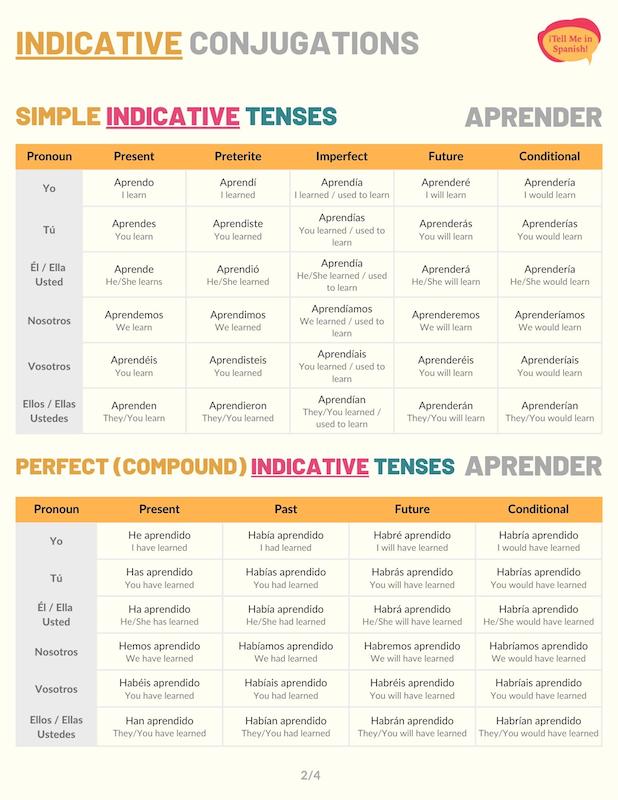
I’ve created a PDF for you to download containing all of the conjugation tables, verb characteristics, and uses so you can study it at your own pace!
Practice Quiz: Aprender Conjugation
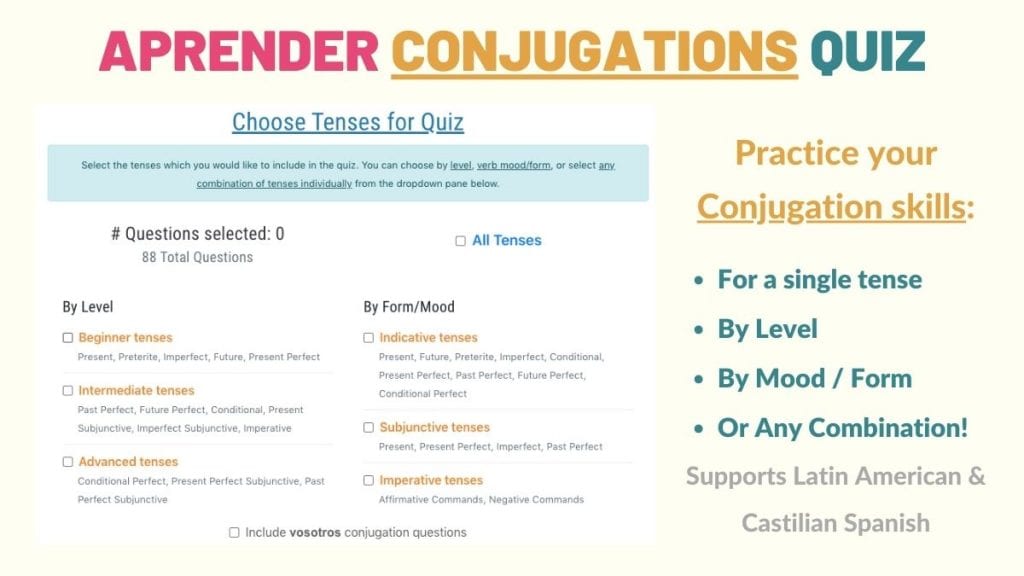
Take our quiz to practice your verb conjugations skills with ‘aprender’.