Family is a common topic you can use in conversations. So, in this article, you’ll learn words for all family members in Spanish and daily-life vocabulary you can use to talk about family. Here is an overview of what we’ll cover:
- Family Members in Spanish
- Adjectives to Describe Your Family
- Bonus: Questions about Family in Spanish
- Quiz
- Download the Family Members Cheat Sheet
Members of the Family in Spanish
Below you’ll find the vocabulary for family members in Spanish. I’ve included some notes for each category so you can use these words correctly.
Immediate family
In Spanish, immediate family members include:
- Mamá – mom
- Papá – dad
- Papás – parents
- Hijo – son
- Hija – daughter
- Hermano – brother
- Hermana – sister
- Hermanos – siblings
- Esposo – husband
- Esposa – wife
Padre, madre and padres mean ‘father’,‘mother’, and ‘parents’, respectively. However, in Spanish, these words are used in formal situations.
Los padres están molestos.
The parents are upset.
If you want to increase your family vocabulary, you can check these articles on different ways to say ‘mom’ and ‘dad’ in Spanish.
Take Note: ‘Padre’ can be used as a Mexican slang word for ‘cool’.
Extended family
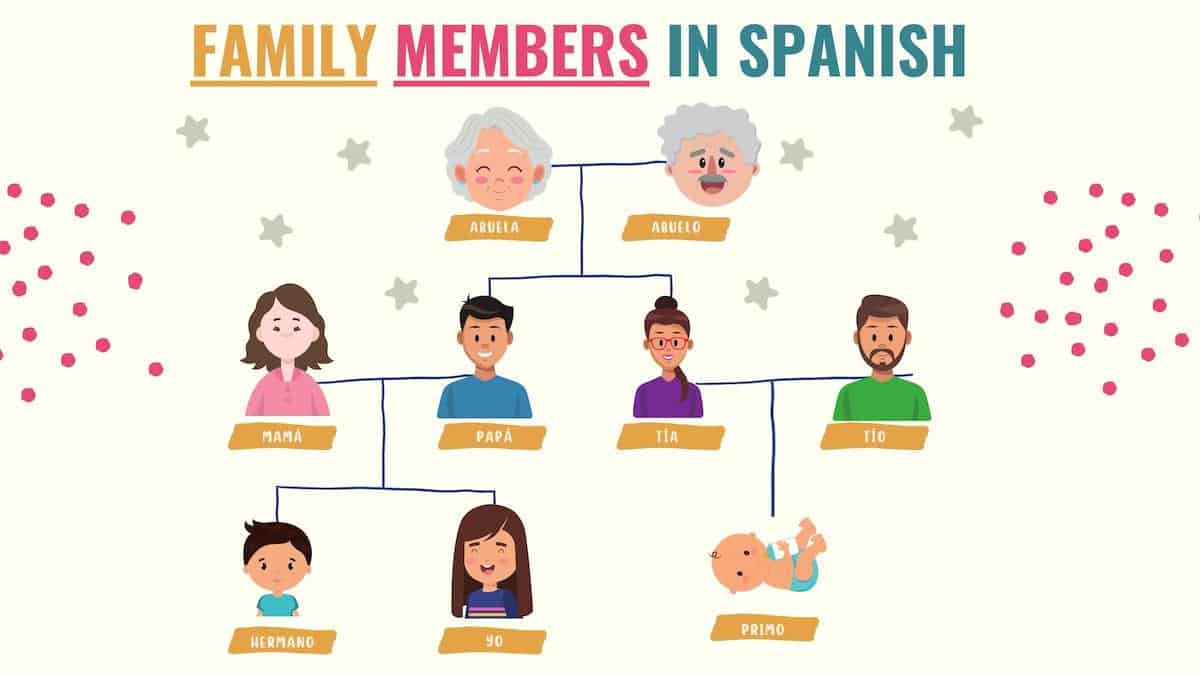
The words for extended family members in Spanish are:
- Abuelo – Grandfather
- Abuela – Grandmother
- Abuelos – Grandparents
- Tío – Uncle
- Tía – Aunt
- Primo(a) – Cousin
- Sobrino – Nephew
- Sobrina – Niece
- Nieto – Grandson
- Nieta – Granddaughter
- Nietos – Grandchildren
- Pariente – Relative
Tip: In Spanish, we use a plural masculine word as a neutral noun when talking about a group of people formed by men and women. If people of the same gender formed that group, we would use the feminine or masculine word. Check the example below:
Juan, María y Tania son mis tíos.
Juan, María, and Tania are my uncles.
María y Tania son mis hermanas.
María and Tania are my sisters.
So, in the first example, tíos is used as a neutral word because I’m talking about a mixed group (uncles and aunts). However, in the second example, María and Tania are two females because of that I can use the feminine term hermanas (sisters).
Family in-law members in Spanish
- Familia política: family-in-law
- Suegro: father-in-law
- Suegra: mother-in-law
- Nuera: daughter-in-law
- Yerno: son-in-law
- Cuñado: brother-in-law
- Cuñada: sister-in-law
- Tío político: uncle by marriage
- Tía política: aunt by marriage
In Spanish, we use family-in-law words to call or refer to our in-laws politely and respectfully. As a result, this vocabulary is as essential as other words for family members.
This application can be strange for many people learning Spanish. If you’re unsure of how to use these terms properly, you can see some examples in my article about family-in-laws in Spanish.
Blended family
If you have a blended family, here is the Spanish vocabulary you’ll need:
- Padrastro: step-father
- Madrastra: step-mother
- Hijastro: step-son
- Hijastra: step-daughter
- Hermanastro: step-brother
- Hermanastra: step-sister
- Medio hermano: half-brother
- Media hermana: half-sister
- Familia adoptiva: adoptive family
Words to Describe Your Family in Spanish
In this section, you’ll find adjectives, verbs, and common sentence structures you can use to describe and talk about your family.
To express the amount of relatives you have, you’ll use:
[‘Tener’ present tense] + (number) + [family word]
Yo tengo un hermano y una hermana.
I have one brother and one sister.
No tengo hermanos. Soy hijo único.
I don’t have siblings. I’m an only child.
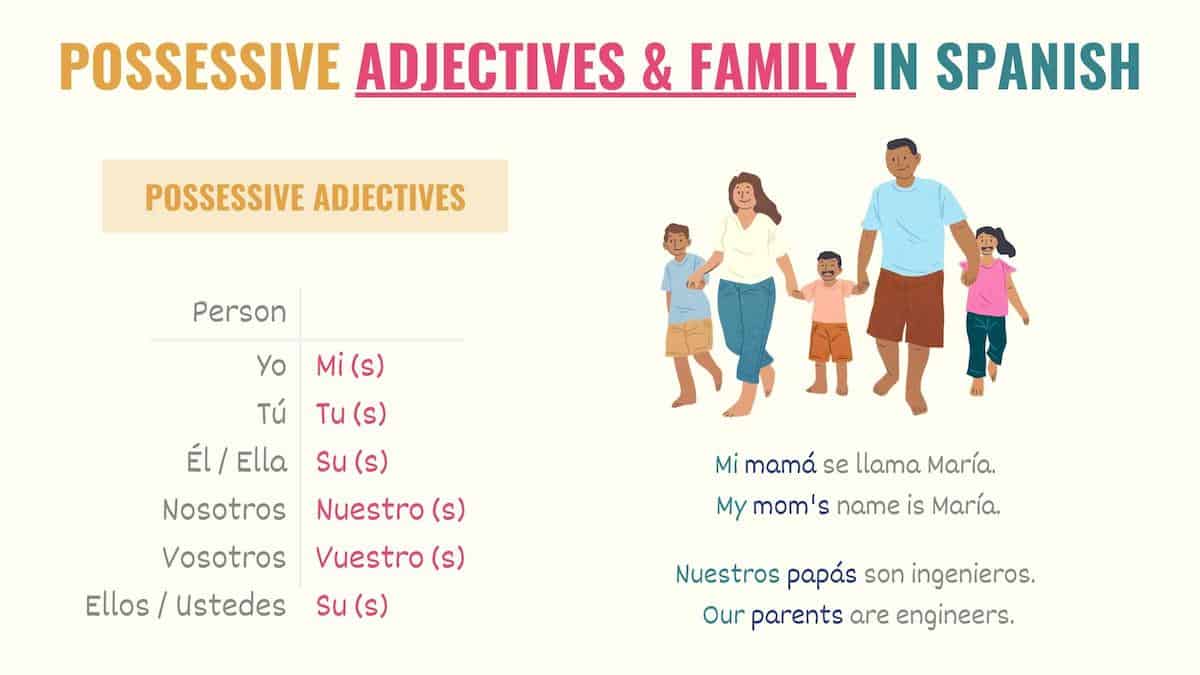
Spanish possessive adjectives to talk about your relatives and family relationships:
Ella es mi mamá.
That’s my mom.
Mis hermanas son contadoras.
My sisters are accountants.
Tu familia es muy divertida.
Your family is very funny.
And here you have some descriptive adjectives you can use to describe your family and relatives:
- Amable: Kind / Welcoming
- Amorosa: Loving
- Conservadora: Traditional
- Comprensiva: Understanding / Supportive
- Chismosa: Nosy
- Criticona: Judgemental
- Disfuncional: Dysfunctional
- Divertida: Funny
- Enfadosa: Annoying
- Excéntrica: Eccentric
- Graciosa: Funny / Amusing
- Moderna: Modern
- Ruidosa: Noisy
- Tolerante: Accepting
- Trabajadora: Hard-working
- Unida: Close-knit
You must use these adjectives with the verb ‘ser’. You can also change the gender and number of these adjectives to describe relatives.
Tu familia es muy graciosa.
Your family is very funny.
Somos una familia muy unida.
We’re a very close-knit family.
Mis tías son criticonas y chismosas.
My aunts are judgemental and nosy.
If you want to provide a thorough description of your relatives, in this article, you can learn more Spanish adjectives for personality and physical characteristics.

Conversation Bonus: Questions about Family in Spanish
Since family is a common talking point, here are some Spanish questions about family you can use in your conversations:
| Spanish | English |
|---|---|
| ¿Tienes hermanos? | Do you have siblings? |
| ¿Cuántos hermanos tienes? | How many siblings do you have? |
| ¿A qué se dedica tu [pariente]? | What does your [relative] do for a living? |
| ¿En qué trabaja tu [pariente]? | What does your [relative] do for a living? |
| ¿Cómo se llama tu [pariente]? | What’s your [relative]’s name? |
| ¿Cuántos años tiene tu [pariente]? | How old is your [relative]? |
| ¿Cómo es tu familia? | How is your family? |
| ¿Cómo es tu [pariente]? | How is your [relative]? |
| ¿Quién es el [mayor/menor]? | Who is the [oldest/youngest]? |
| ¿Cómo te llevas con tu familia? | How do you get along with your family? |
If you want to learn more simple questions you can use to start a conversation in Spanish, you should check my free Spanish Learning Kit.
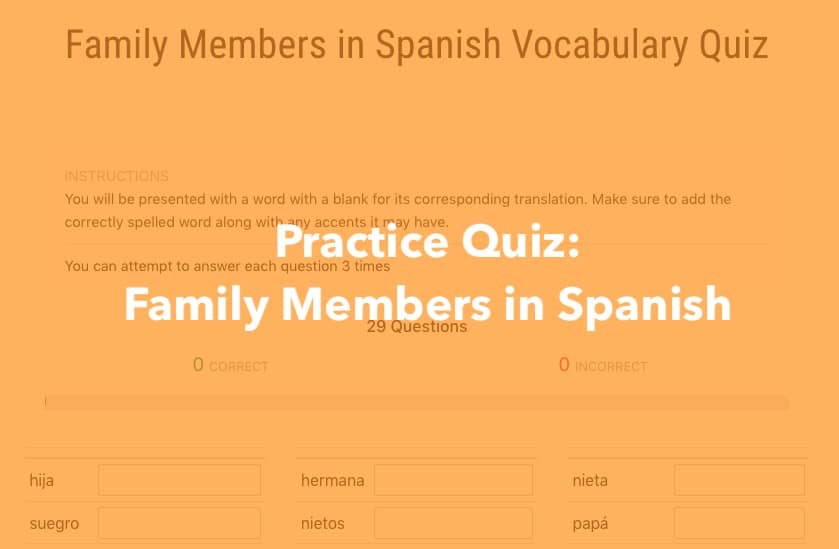
Practice Quiz: Family Members Spanish Vocabulary
Now that you’ve learned how to refer to family members in Spanish, feel free to take this quiz to memorize the vocabulary and test your knowledge!
Family Members Vocabulary Cheat Sheets
I’ve created a downloadable PDF for you to save for later if you want a quick reference on any of the vocab for family members in Spanish that you learned in this guide.