
Like other verbs ending with –car, there are certain consonant changes you must follow when conjugating buscar. To help you get familiar with these changes, in this guide, you’ll find charts with the most frequently used buscar conjugations.
Here’s a summary of what you’ll find:
- Buscar Overview
- Indicative Tenses of Buscar Conjugations
- Subjunctive Tenses of Buscar Conjugations
- Imperative (Commands) of Buscar Conjugations
- Uses & Examples
- Download Buscar Conjugation Tables & Uses Cheat sheets
- Buscar Conjugation Practice Quiz
Take Note: There are many tenses in Spanish. However, we don’t use them all. Many are simply old and outdated. As a result, in this guide, you’ll only learn the tenses you need to know to become fluent in Spanish.
Overview of Buscar
| Verb Characteristic | Property |
|---|---|
| Verb Type | ‘-AR‘ |
| Irregular | No |
| Infinitive | Buscar |
| Gerund (Present Participle) Form | Buscando |
| Past Participle Form | Buscado |
| Synonyms | Averiguar, indagar, investigar, recoger |
Stem Changes:
- Preterite: busqu only for ‘yo’.
- Present subjuctive: busqu for all subject pronouns.
- Affirmative imperative: busqu only for ‘usted/ustedes’.
- Negative imperative: busqu for all subject pronouns.
Indicative Conjugations of Buscar
Present tense
The present tense conjugations of buscar are regular. With this tense, ‘buscar’ refers to things people are currently looking for. For example: ¿qué buscas?
| Person | Conjugation | Translation |
|---|---|---|
| Yo | Busco | I search |
| Tú | Buscas | You search |
| Él / Ella Usted | Busca | He/She searches You (formal) search |
| Nosotros | Buscamos | We search |
| Vosotros | Buscáis | You search |
| Ellos / Ellas Ustedes | Buscan | They search You (plural) search |
Preterite tense
In the preterite tense, buscar has a stem change when conjugating to the first person form, yo. As shown in the conjugation chart below, this pronoun uses the stem ‘busq-’. The preterite conjugations of ‘buscar’ refer to things someone searched at a specific moment in the past. Busqué en todos lados.
| Person | Conjugation | Translation |
|---|---|---|
| Yo | Busqué | I searched |
| Tú | Buscaste | You searched |
| Él / Ella Usted | Buscó | He/She searched You (formal) searched |
| Nosotros | Buscamos | We searched |
| Vosotros | Buscasteis | You searched |
| Ellos / Ellas Ustedes | Buscaron | They searched You (plural) searched |
Imperfect tense
The imperfect conjugations of ‘buscar’ allow you to talk about things people used to search repeatedly in the past. In conversational Spanish, the imperfect forms of buscar are a polite way to let clerks know what you’re looking for. Hola, buscaba un control universal.
| Person | Conjugation | Translation |
|---|---|---|
| Yo | Buscaba | I searched I used to search |
| Tú | Buscabas | You searched You used to search |
| Él / Ella Usted | Buscaba | He/She searched He/She used to search You (formal) searched You (formal) used to search |
| Nosotros | Buscábamos | We searched We used to search |
| Vosotros | Buscabais | You searched You used to search |
| Ellos / Ellas Ustedes | Buscaban | They searched They used to search You (plural) searched You (plural) used to search |
Near future
For the verb ‘buscar’, the Spanish immediate future is used to talk about the things you’ll search or look for soon in the future. En la tarde, vamos a ir a buscar los regalos. The near future of ‘buscar’ is formed with ir (present) + a + buscar and can be translated as “going to search/look/find”.
| Person | Conjugation | Translation |
|---|---|---|
| Yo | Voy a buscar | I’m going to search |
| Tú | Vas a buscar | You’re going to search |
| Él / Ella Usted | Va a buscar | He/She is going to search You (formal) are going to search |
| Nosotros | Vamos a buscar | We’re going to search |
| Vosotros | Vais a buscar | You’re going to search |
| Ellos / Ellas Ustedes | Van a buscar | They’re going to search You (plural) are going to search |
Future simple tense
Buscar’s future conjugations are regular. We use the future tense of ‘buscar’ to talk about things or people we plan to search or look for at some point in the future. For instance: en unos meses buscaremos otro departamento.
| Person | Conjugation | Translation |
|---|---|---|
| Yo | Buscaré | I will search |
| Tú | Buscarás | You will search |
| Él / Ella Usted | Buscará | He/She will search You (formal) will search |
| Nosotros | Buscaremos | We will search |
| Vosotros | Buscaréis | You (formal) will search |
| Ellos / Ellas Ustedes | Buscarán | They will search You (plural) will search |
Conditional tense
Buscar in the conditional tense is used to talk about the things you would search or look for if a certain circumstance was met. Si fuera tú, yo buscaría mi cartera hasta encontrarla.
| Person | Conjugation | Translation |
|---|---|---|
| Yo | Buscaría | I would search |
| Tú | Buscarías | You would search |
| Él / Ella Usted | Buscaría | He/She would search You (formal) would search |
| Nosotros | Buscaríamos | We would search |
| Vosotros | Buscaríais | You would search |
| Ellos / Ellas Ustedes | Buscarían | They would search You (plural) would search |
Present perfect tense
The formula to conjugate the present perfect of ‘buscar’ is haber + buscado. In the present tense, ‘buscar’ is used to talk about things you have or haven’t looked for. ¿Dónde estabas? Te he buscado por todos lados.
| Person | Conjugation | Translation |
|---|---|---|
| Yo | He buscado | I have searched |
| Tú | Has buscado | You have searched |
| Él / Ella Usted | Ha buscado | He/She has searched You (formal) have searched |
| Nosotros | Hemos buscado | We have searched |
| Vosotros | Habéis buscado | You have searched |
| Ellos / Ellas Ustedes | Han buscado | They have searched You (plural) have searched |
Past perfect
Buscar conjugated to the past perfect tense communicates that someone searched or looked for something before some other reference point in the past. Te dije que ya había buscado aquí. The formula for the past perfect is haber (imperfect form) + buscado (past participle).
| Person | Conjugation | Translation |
|---|---|---|
| Yo | Había buscado | I had searched |
| Tú | Habías buscado | You had searched |
| Él / Ella Usted | Había buscado | He/She had searched You (formal) had searched |
| Nosotros | Habíamos buscado | We had searched |
| Vosotros | Habíais buscado | You had searched |
| Ellos / Ellas Ustedes | Habían buscado | They had searched You (plural) had searched |
Future perfect
To form the future perfect of ‘buscar’, you must conjugate haber to the future tense and add buscado (the past participle of ‘buscar’). With this tense, ‘buscar’ is used to talk about the things for which someone will have searched by or before a certain time in the future. For instance: ¿crees que para el lunes ya habrás buscado mi libro?
| Person | Conjugation | Translation |
|---|---|---|
| Yo | Habré buscado | I will have searched |
| Tú | Habrás buscado | You will have searched |
| Él / Ella Usted | Habrá buscado | He/She will have searched You (formal) will have searched |
| Nosotros | Habremos buscado | We will have searched |
| Vosotros | Habréis buscado | You will have searched |
| Ellos / Ellas Ustedes | Habrán buscado | They will have searched You (plural) will have searched |
Conditional perfect
‘Buscar’ to the conditional tense refers to things you would have searched or looked for if a past circumstance had been met. For example: si hubiera tenido más tiempo, habría buscado mejor.
| Person | Conjugation | Translation |
|---|---|---|
| Yo | Habría buscado | I would have searched |
| Tú | Habrías buscado | You would have searched |
| Él / Ella Usted | Habría buscado | He/She would have searched You (formal) would have searched |
| Nosotros | Habríamos buscado | We would have searched |
| Vosotros | Habríais buscado | You would have searched |
| Ellos / Ellas Ustedes | Habrían buscado | They would have searched You (plural) would have searched |
Progressive tenses
The progressive tenses’ forms of ‘buscar’ are used to express that a person is searching or looking for something at the moment of speaking. For instance: cuando llegaste, estaba buscando mis llaves. The present progressive tenses of ‘buscar’ are formed with the structure estar + buscando.
| Progressive Tense | Formula | Translation Example |
|---|---|---|
| Present | Estar (present) + buscando | I am searching |
| Preterite | Estar (preterite) + buscando | You were searching |
| Imperfect | Estar (imperfect) + buscando | He was searching |
| Future | Estar (future) + buscando | We will be searching |
| Conditional | Estar (conditional) + buscando | They would be searching |
Buscar Subjunctive Conjugations
In Spanish, the subjunctive mood is used to talk about wishes, hypothetical situations or express uncertainty. The conjugation charts below show the subjunctive forms of buscar.
Present subjunctive
All buscar subjunctive conjugations are irregular. To conjugate buscar to the subjunctive tense, you must use the stem ‘busqu-’. With this tense, ‘buscar’ is used to tell people what you want them to search for. For example: quiero que busques mis llaves.
| Person | Conjugation | Translation |
|---|---|---|
| Yo | Busque | I search |
| Tú | Busques | You search |
| Él / Ella Usted | Busque | He/She searches You (formal) search |
| Nosotros | Busquemos | We search |
| Vosotros | Busquéis | You search |
| Ellos / Ellas Ustedes | Busquen | They search You (plural) search |
Present perfect subjunctive
The present perfect subjunctive of ‘buscar’ is used to communicate hypotheses or express uncertainty about what people have searched. Haber in the present subjunctive + buscado is the structure you should use to build this tense. ¿Crees que Clive haya buscado tu celular?
| Person | Conjugation | Translation |
|---|---|---|
| Yo | Haya buscado | I have searched |
| Tú | Hayas buscado | You have searched |
| Él / Ella Usted | Haya buscado | He/She has searched You (formal) have searched |
| Nosotros | Hayamos buscado | We have searched |
| Vosotros | Hayáis buscado | You have searched |
| Ellos / Ellas Ustedes | Hayan buscado | They have searched You (plural) have searched |
Imperfect subjunctive
The imperfect subjunctive forms of ‘buscar’ can be used to talk about past requests to search something. For example, Cathy me pidió que buscara otro vuelo.
The imperfect subjunctive has two conjugation models depending on which type of Spanish you’re speaking:
Latin American Spanish version
| Person | Conjugation | Translation |
|---|---|---|
| Yo | Buscara | I searched |
| Tú | Buscaras | You searched |
| Él / Ella Usted | Buscara | He/She searched You (formal) searched |
| Nosotros | Buscáramos | We searched |
| Ellos / Ellas Ustedes | Buscaran | They searched You (plural) searched |
Note: The table above doesn’t include the conjugation for vosotros because this pronoun is not used in Latin American Spanish.
Castilian Spanish version
| Person | Conjugation | Translation |
|---|---|---|
| Yo | Buscase | I searched |
| Tú | Buscases | You searched |
| Él / Ella Usted | Buscase | He/She searched You (formal) searched |
| Nosotros | Buscásemos | We searched |
| Vosotros | Buscaseis | You searched |
| Ellos / Ellas Ustedes | Buscasen | They You searched You (plural) You searched |
Past perfect subjunctive
In the past perfect subjunctive, buscar is used to talk about things you might have searched for if a past circumstance was met. This tense can also express regrets for things you wished you had searched for. For instance: me hubieras dicho y hubiéramos buscado tu cartera antes de irnos.
| Person | Conjugation | Translation |
|---|---|---|
| Yo | Hubiera buscado | I had searched |
| Tú | Hubieras buscado | You had searched |
| Él / Ella Usted | Hubiera buscado | He/She had searched You (formal) had searched |
| Nosotros | Hubiéramos buscado | We had searched |
| Vosotros | Hubierais buscado | You had searched |
| Ellos / Ellas Ustedes | Hubieran buscado | They had searched You (plural) had searched |


Buscar Imperative Conjugations
Spanish commands allow you to tell people what to do (affirmative commands) or what not to do (negative commands).
Affirmative commands
To conjugate the affirmative imperative of ‘buscar’ you must use the stem ‘busqu-’ for ‘usted’ and ‘ustedes’. With these conjugations, you can order people to search or look for something. For example: Emma, Luis, busque las llaves, por favor.
| Person | Conjugation | Translation |
|---|---|---|
| Tú | Busca | Search |
| Usted | Busque | Search |
| Vosotros | Buscad | Search |
| Ustedes | Busquen | Search |
Negative commands
All the negative commands of ‘buscar’ use the stem ‘busqu-’. We use the negative imperative to order someone to not look or search for something. Por favor, no busques en mi bolsa.
| Person | Conjugation | Translation |
|---|---|---|
| Tú | No busques | Don’t search |
| Usted | No busque | Don’t search |
| Vosotros | No busquéis | Don’t search |
| Ustedes | No busquen | Don’t search |
Meanings of Buscar & Examples
Now that you’ve checked the conjugation charts for buscar, you should learn how to use this verb correctly.
- Talking about searching or looking for people or things
Buenas tardes, estoy buscando a Donna.
Good afternoon, I’m looking for Donna.
Todavía no hemos buscado aquí.
We still haven’t searched here.
Michelle quiere que busquemos el libro que nos prestó.
Michelle wants us to look for the book we borrowed from her.
Take Note: The prepositions a and en are frequently used with the verb ‘buscar’. A is used with people and en to imply that you’re searching for something in a room or enclosed space.
- Expressing you’re picking up someone
[Buscar conjugated] + a + [person]
Ahorita venimos, vamos a buscar a Lety.
We’ll be right back, we’re picking Letty up.
¿A qué hora van a buscar a los niños?
What time are you guys going to pick up the kids?
Download Buscar Conjugation Tables & Uses Cheat sheets
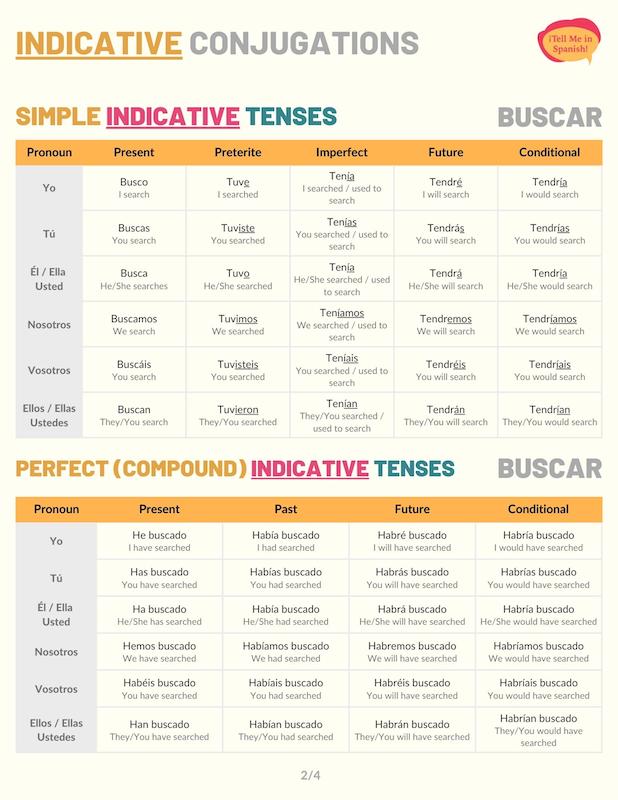
I’ve created a PDF for you to download containing all of the conjugation tables, verb characteristics, and uses so you can study it at your own pace!
Practice Quiz: Buscar Conjugation
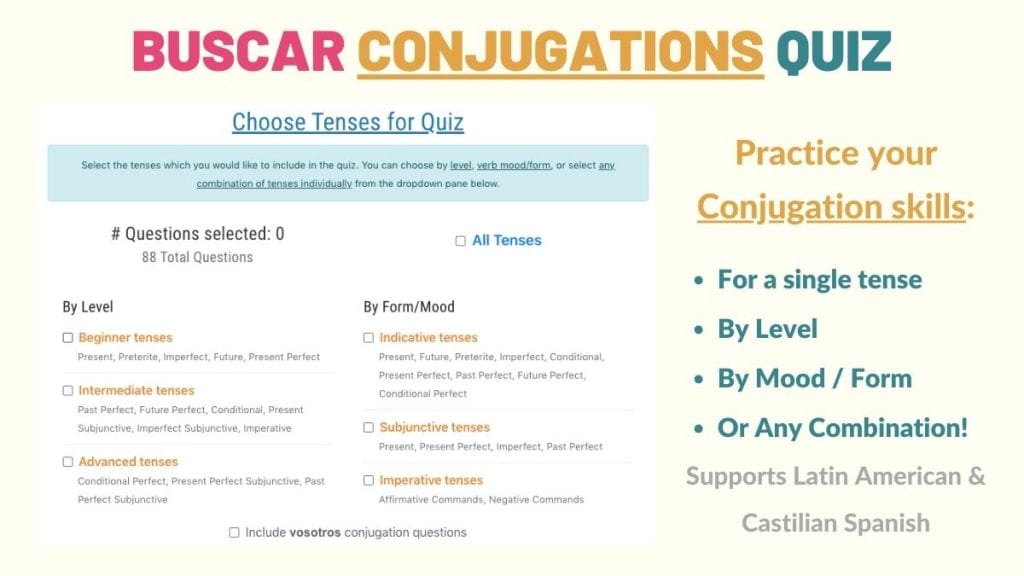
Take our buscar conjugations practice quiz to put your conjugation skills to the test and improve your use of this essential verb.