
Dejar is a common regular -AR verb. We use this verb to talk about leaving things behind, but also about quitting an activity. Here is a quick summary of what you’ll learn in this dejar conjugation guide:
- Dejar Overview
- Indicative Tenses of Dejar Conjugations
- Subjunctive Tenses of Dejar Conjugations
- Imperative (Commands) of Dejar Conjugations
- Uses & Examples
- Download Dejar Conjugation Tables & Uses Cheat sheets
- Dejar Conjugation Practice Quiz
Overview of Dejar
| Verb Characteristic | Property |
|---|---|
| Verb Type | -AR |
| Irregular | No |
| Infinitive | Dejar |
| Gerund (Present Participle) Form | Dejando |
| Past Participle Form | Dejado |
| Synonyms | Abandonar, permitir. |
Dejar means ‘to leave’, ‘to quit’ or ‘to allow’. For simplicity, the conjugation charts in the sections below will only include one translation. You can learn more about the extra meanings in the section on Uses & Examples.
Indicative Conjugations of Dejar
Present tense
The present tense forms of dejar are used to explain that a person leaves something or someone in a certain place. For example: Siempre dejo las llaves en la mesa.
| Person | Conjugation | Translation |
|---|---|---|
| Yo | Dejo | I leave |
| Tú | Dejas | You leave |
| Él / Ella Usted | Deja | He/She leaves You (formal) leave |
| Nosotros | Dejamos | We leave |
| Vosotros | Dejáis | You leave |
| Ellos / Ellas Ustedes | Dejan | They leave You (plural) leave |
Preterite tense
The preterite conjugation of dejar communicates that a person left something somewhere or that someone quit doing something at a specific moment in the past. For instance: Mi papá dejó de trabajar hace dos años.
| Person | Conjugation | Translation |
|---|---|---|
| Yo | Dejé | I left |
| Tú | Dejaste | You left |
| Él / Ella Usted | Dejó | He/She left You (formal) left |
| Nosotros | Dejamos | We left |
| Vosotros | Dejasteis | You left |
| Ellos / Ellas Ustedes | Dejaron | They left You (plural) left |
Imperfect tense
Dejar follows the conjugation pattern of -AR verbs in the imperfect tense. Use dejar in this tense to talk about things or people you used to leave or things you weren’t allowed to do in the past. For example: Mi mamá no nos dejaba comer chocolate.
| Person | Conjugation | Translation |
|---|---|---|
| Yo | Dejaba | I left I used to leave |
| Tú | Dejabas | You left You used to leave |
| Él / Ella Usted | Dejaba | He/She left He/She used to leave You (formal) left You (formal) used to leave |
| Nosotros | Dejábamos | We left We used to leave |
| Vosotros | Dejabais | You left You used to leave |
| Ellos / Ellas Ustedes | Dejaban | They left They used to leave You (plural) left You (plural) used to leave |
Near future
Ir (present) + a + infinitive (in this case, ‘dejar’) is the formula to conjugate it to the near future. In this tense, ‘dejar’ communicates that you’re about to quit doing something or you’re about to leave something. ¿Vas a dejar el coche?
| Person | Conjugation | Translation |
|---|---|---|
| Yo | Voy a dejar | I’m going to leave |
| Tú | Vas a dejar | You’re going to leave |
| Él / Ella Usted | Va a dejar | He/She is going to leave You (formal) are going to leave |
| Nosotros | Vamos a dejar | We’re going to leave |
| Vosotros | Vais a dejar | You’re going to leave |
| Ellos / Ellas Ustedes | Van a dejar | They’re going to leave You (plural) are going to leave |
Future simple tense
Use the future simple of dejar to explain that you plan to leave something in a place or quit a habit at some point in the future. For example: Dejaré tu bolsa en el comedor.
| Person | Conjugation | Translation |
|---|---|---|
| Yo | Dejaré | I will leave |
| Tú | Dejarás | You will leave |
| Él / Ella Usted | Dejará | He/She will leave You (formal) will leave |
| Nosotros | Dejaremos | We will leave |
| Vosotros | Dejaréis | You (formal) will leave |
| Ellos / Ellas Ustedes | Dejarán | They will leave You (plural) will leave |
Conditional tense
The conditional conjugations of dejar allow you to express that a person would leave something in a certain place. For example: Yo no dejaría mi celular aquí.
| Person | Conjugation | Translation |
|---|---|---|
| Yo | Dejaría | I would leave |
| Tú | Dejarías | You would leave |
| Él / Ella Usted | Dejaría | He/She would leave You (formal) would leave |
| Nosotros | Dejaríamos | We would leave |
| Vosotros | Dejaríais | You would leave |
| Ellos / Ellas Ustedes | Dejarían | They would leave You (plural) would leave |
Present perfect tense
The Spanish present perfect tense conveys that someone has or hasn’t left a place. You can also use these conjugations to talk about actions you have or haven’t stopped doing. For example: No he dejado de comer desde que llegamos.
| Person | Conjugation | Translation |
|---|---|---|
| Yo | He dejado | I have left |
| Tú | Has dejado | You have left |
| Él / Ella Usted | Ha dejado | He/She has left You (formal) have left |
| Nosotros | Hemos dejado | We have left |
| Vosotros | Habéis dejado | You have left |
| Ellos / Ellas Ustedes | Han dejado | They have left You (plural) have left |
Past perfect
Dejar in the past perfect tense communicates that you left something or someone allowed you to do something before some other reference point in the past. Dijiste que habías dejado el carro en la casa. To form the past perfect, use the imperfect form of ‘haber’ and the past participle form of ‘dejar’.
| Person | Conjugation | Translation |
|---|---|---|
| Yo | Había dejado | I had left |
| Tú | Habías dejado | You had left |
| Él / Ella Usted | Había dejado | He/She had left You (formal) had left |
| Nosotros | Habíamos dejado | We had left |
| Vosotros | Habíais dejado | You had left |
| Ellos / Ellas Ustedes | Habían dejado | They had left You (plural) had left |
Future perfect
The future perfect of ‘dejar’ communicates that you will have left something or stop doing an activity by or before a certain time in the future. These conjugations are also used to ask where a person might have left something. For instance: ¿Dónde habré dejado mi cartera?
| Person | Conjugation | Translation |
|---|---|---|
| Yo | Habré dejado | I will have left |
| Tú | Habrás dejado | You will have left |
| Él / Ella Usted | Habrá dejado | He/She will have left You (formal) will have left |
| Nosotros | Habremos dejado | We will have left |
| Vosotros | Habréis dejado | You will have left |
| Ellos / Ellas Ustedes | Habrán dejado | They will have left You (plural) will have left |
Conditional perfect
Dejar conjugated to the conditional perfect conveys that a person would have left something or have allowed others to do an activity if a past condition had been met. For example: Si les hubieran dicho, mis primos habrían dejado su carro aquí.
| Person | Conjugation | Translation |
|---|---|---|
| Yo | Habría dejado | I would have left |
| Tú | Habrías dejado | You would have left |
| Él / Ella Usted | Habría dejado | He/She would have left You (formal) would have left |
| Nosotros | Habríamos dejado | We would have left |
| Vosotros | Habríais dejado | You would have left |
| Ellos / Ellas Ustedes | Habrían dejado | They would have left You (plural) would have left |
Progressive tenses
The progressive tenses of dejar express that someone is leaving something in a certain place at the moment of speaking. Ahorita llego, estoy dejando a las niñas en la escuela.
| Progressive Tense | Formula | Translation Example |
|---|---|---|
| Present | Estar (present) + dejando | I am leaving |
| Preterite | Estar (preterite) + dejando | You were leaving |
| Imperfect | Estar (imperfect) + dejando | He was leaving |
| Future | Estar (future) + dejando | We will be leaving |
| Conditional | Estar (conditional) + dejando | They would be leaving |
Dejar Subjunctive Conjugations
In Spanish, the subjunctive tenses are used to talk about wishes, hypothetical situations or express uncertainty. The conjugation charts below show how to conjugate dejar to its subjunctive forms.
Present subjunctive
Dejar subjunctive conjugations are regular. Use ‘dejar’ in the present subjunctive to recommend, demand, or hope that someone leaves or stops doing something. For example: Les recomiendo que dejen de perder el tiempo.
| Person | Conjugation | Translation |
|---|---|---|
| Yo | Deje | I leave |
| Tú | Dejes | You leave |
| Él / Ella Usted | Deje | He/She leaves You (formal) leave |
| Nosotros | Dejemos | We leave |
| Vosotros | Dejéis | You leave |
| Ellos / Ellas Ustedes | Dejen | They leave You (plural) leave |
Present perfect subjunctive
Haber in the present subjunctive + dejado is the formula to build the present perfect subjunctive of ‘dejar’. When using this tense, ‘dejar’ is used to express doubt about someone leaving something behind, giving permission to another person, or quitting an activity.
No creo que sus papás la hayan dejado venir.
| Person | Conjugation | Translation |
|---|---|---|
| Yo | Haya dejado | I have left |
| Tú | Hayas dejado | You have left |
| Él / Ella Usted | Haya dejado | He/She has left You (formal) have left |
| Nosotros | Hayamos dejado | We have left |
| Vosotros | Hayáis dejado | You have left |
| Ellos / Ellas Ustedes | Hayan dejado | They have left You (plural) have left |
Imperfect subjunctive
Use the imperfect subjunctive conjugations of ‘dejar’ to refer to past suggestions, wishes or expectations you had about someone leaving something in a place. Te pedí que dejases las llaves en la mesa.
Latin American Spanish version
| Person | Conjugation | Translation |
|---|---|---|
| Yo | Dejara | I left |
| Tú | Dejaras | You left |
| Él / Ella Usted | Dejara | He/She left You (formal) left |
| Nosotros | Dejáramos | We left |
| Ellos / Ellas Ustedes | Dejaran | They left You (plural) left |
Note: The table above doesn’t include the conjugation for vosotros because this pronoun is not used in Latin American Spanish.
Castilian Spanish version
| Person | Conjugation | Translation |
|---|---|---|
| Yo | Dejase | I left |
| Tú | Dejases | You left |
| Él / Ella Usted | Dejase | He/She left You (formal) left |
| Nosotros | Dejásemos | We left |
| Vosotros | Dejaseis | You left |
| Ellos / Ellas Ustedes | Dejasen | They left You (plural) left |
Past perfect subjunctive
The past perfect subjunctive of dejar communicates that someone would have left something or have stopped doing an activity if a past circumstance was met. You can also use these conjugations to express regrets or hypothetical results about being allowed to do something.
For instance: ojalá me hubiera dejado ir a la fiesta.
| Person | Conjugation | Translation |
|---|---|---|
| Yo | Hubiera dejado | I had left |
| Tú | Hubieras dejado | You had left |
| Él / Ella Usted | Hubiera dejado | He/She had left You (formal) had left |
| Nosotros | Hubiéramos dejado | We had left |
| Vosotros | Hubierais dejado | You had left |
| Ellos / Ellas Ustedes | Hubieran dejado | They had left You (plural) had left |
Dejar Imperative Conjugations
The imperative is used to give commands in Spanish. In other words, it’s used to tell others what to do (affirmative imperative) and what not to do (negative imperative).
Affirmative commands
Use the affirmative commands of ‘dejar’ to instruct someone to leave something. For instance: Dejen eso en su lugar.
| Person | Conjugation | Translation |
|---|---|---|
| Tú | Deja | Leave |
| Usted | Deje | Leave |
| Vosotros | Dejad | Leave |
| Ustedes | Dejen | Leave |
Negative commands
Dejar conjugated to the negative imperative is used to order someone to not leave something. For example: No dejes la puerta abierta.
| Person | Conjugation | Translation |
|---|---|---|
| Tú | No dejes | Don’t leave |
| Usted | No deje | Don’t leave |
| Vosotros | No dejéis | Don’t leave |
| Ustedes | No dejen | Don’t leave |
Meanings of Dejar & Examples
Dejar is a verb with multiple and useful applications in Spanish. Below are some of the most common uses of this verb. Be aware that we’re using some of the different tenses we learned in the previous conjugation charts.
1. Talking about leaving something or someone
[Dejar conjugated] + [determiner] + [noun]
No dejes las llaves en el carro.
Don’t leave the keys on the car.
[Dejar conjugated] + a + [person]
Voy a dejar a las niñas con su abuela.
I’m leaving the kids with their grandma.
Take Note: If the context is clear, you can use direct object pronouns to replace the noun in your sentences.
2. As a synonym of ‘stop doing something’
[Dejar conjugated] + de [infinitive verb]
¿Cuándo dejarás de decir mentiras?
When would you stop lying?
En unas horas voy a dejar de trabajar.
I am going to stop working in a few hours.
3. Giving permission or allowing to do something
[Direct object pronoun] + [dejar conjugated] + [infinitive verb]
El ruido no me dejó dormir.
The noise didn’t let me sleep.
Sus papás no la dejan tener novio.
Her parents don’t allow her to have a boyfriend.
Take Note: When talking about leaving something behind or allowing a person to do an activity, dejar is a transitive verb. Infinitive verbs and direct objects pronouns are used to complete the meaning of the sentence.
Download Dejar Conjugation Tables & Uses Cheat sheets
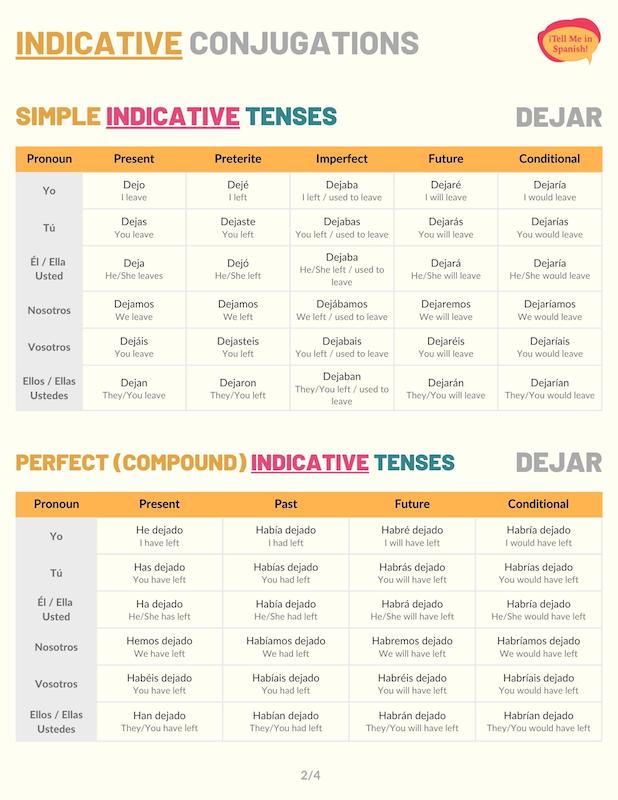
You can download the dejar conjugation cheat sheets PDF including all the tense charts, uses, and meanings for this verb to study at your convenience.
Practice Quiz: Dejar Conjugation
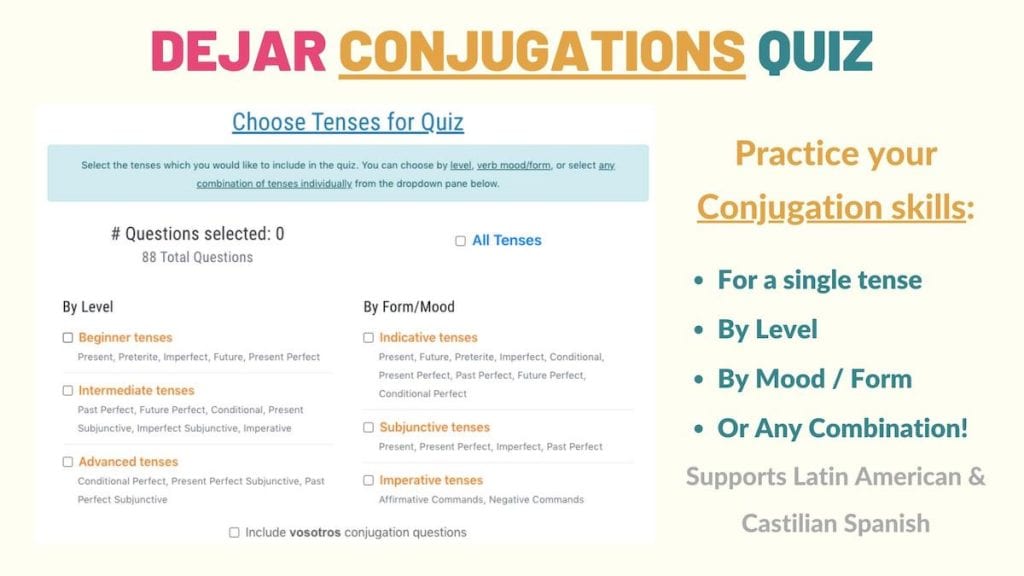
Now that you’ve learned how to conjugate dejar in Spanish, you can have fun while you study by taking the dejar conjugation practice quiz.