
Tener is one of the most common verbs in Spanish. For that reason, you need to learn its different forms. So, in this guide, you’ll learn how to conjugate ‘tener’ in the most common tenses. Here is what you’ll learn:
- ‘Tener’ Overview
- Indicative Tenses of ‘Tener’ Conjugations
- Subjunctive Tenses of ‘Tener’ Conjugations
- Imperative Tense (Commands) of ‘Tener’ Conjugations
- Uses & Examples
- Download Tener Conjugation Tables & Uses Cheat sheets
- Tener Conjugation Practice Quiz
Take Note: There are many tenses in Spanish. However, we don’t use them all. Many are simply old and outdated. As a result, in this guide, you’ll only learn the tenses you need to know to become fluent in Spanish.
Overview of Tener
| Verb Characteristic | Property |
|---|---|
| Verb Type | -ER |
| Irregular | Yes |
| Infinitive | Tener |
| Gerund (Present Participle) Form | Teniendo |
| Past Participle Form | Tenido |
| Synonyms | Poseer, Deber |
Irregularities:
- Present: teng (only for ‘yo)
- Preterite: tuv
- Future & Conditional: tendr
- Present Subjunctive: teng
- Imperfect Subjunctive: tuv
- Affirmative Imperative: ten / teng
- Negative Imperative: teng
Stem Changes: E to IE
- Present Tense: tien for ‘tú’, ‘ella/él/usted’, ‘ellos/ellas/ustedes’.
Take Note: Although tener is the direct translation of ‘to have’, this verb is not used to form perfect tenses. To build these tenses, you must use the verb haber instead. If you want to learn more about these verbs, you should check my article on tener vs haber.
Indicative Conjugations of Tener
Present tense
The present form of ‘tener’ has stem-changes from E to IE. These spelling changes are not applicable to ‘nosotros’, ‘vosotros’ and ‘yo’. ‘Nosotros’ and ‘vosotros’ follow a regular conjugation.
However, the yo form of ‘tener’ is irregular. For this subject, you’ll use the stem ‘teng-’. In the present tense, this verb is used to say your age or to talk about obligations or possessions. For instance: yo tengo dos perros.
| Person | Conjugation | Translation |
|---|---|---|
| Yo | Tengo | I have |
| Tú | Tienes | You have |
| Él / Ella Usted | Tiene | He/She has You (formal) have |
| Nosotros | Tenemos | We have |
| Vosotros | Tenéis | You have |
| Ustedes / Ellos / Ellas | Tienen | They/You have |
Preterite tense
‘Tener’ in the preterite form is irregular. To conjugate this tense, you must use the stem ‘tuv’. The preterite of ‘tener’ is used to talk about things you owned or obligations you performed in the past. Here is an example: tuve que limpiar mi cuarto.
| Person | Conjugation | Translation |
|---|---|---|
| Yo | Tuve | I had |
| Tú | Tuviste | You had |
| Él / Ella Usted | Tuvo | He/She had You (formal) had |
| Nosotros | Tuvimos | We had |
| Vosotros | Tuvisteis | You had |
| Ustedes / Ellos / Ellas | Tuvieron | They/You had |
Imperfect tense
In the imperfect tense, ‘tener’ is regular. The imperfect form of ‘tener’ is used to say people’s age and talk about possession in the past. For example: en 1991, Sharon tenía diez años.
| Person | Conjugation | Translation |
|---|---|---|
| Yo | Tenía | I had |
| Tú | Tenías | You had |
| Él / Ella Usted | Tenía | He/She had You (formal) had |
| Nosotros | Teníamos | We had |
| Vosotros | Teníais | You had |
| Ustedes / Ellos / Ellas | Tenían | They/You had |
Near future
With tener, the near future is used to talk about things you’ll own or must do in the immediate future. This tense is formed with ir (present) + a + tener and can be translated as “going to have”. Este fin de semana vamos a tener una fiesta.
| Person | Conjugation | Translation |
|---|---|---|
| Yo | Voy a tener | I’m going to have |
| Tú | Vas a tener | You’re going to have |
| Él / Ella Usted | Va a tener | He/She is going to have You (formal) are going to have |
| Nosotros | Vamos a tener | We’re going to have |
| Vosotros | Vais a tener | You’re going to have |
| Ustedes / Ellos / Ellas | Van a tener | You/They’re going to have |
Future simple tense
‘Tener’ in the future tense has an irregular conjugation. To build this form, you must use the stem tendr and add the future endings. The simple future allows you to talk about the age, obligations or things you’ll have at some point in the future. Esta semana no tendré tiempo.
| Person | Conjugation | Translation |
|---|---|---|
| Yo | Tendré | I will have |
| Tú | Tendrás | You will have |
| Él / Ella Usted | Tendrá | He/She will have You (formal) will have |
| Nosotros | Tendremos | We will have |
| Vosotros | Tendréis | You will have |
| Ustedes / Ellos / Ellas | Tendrán | They/You will have |
Conditional tense
Like the future, ‘tener’ in the conditional tense is formed with the stem tendr. The conditional form of ‘tener’ communicates that someone would must do or would own something if certain conditions are met. Si me ayudas, tendría más tiempo.
| Person | Conjugation | Translation |
|---|---|---|
| Yo | Tendría | I would have |
| Tú | Tendrías | You would have |
| Él / Ella Usted | Tendría | He/She would have You (formal) would have |
| Nosotros | Tendríamos | We would have |
| Vosotros | Tendríais | You would have |
| Ustedes / Ellos / Ellas | Tendrían | You/They would have |
Present perfect tense
Tener in the present perfect is formed with the verb ‘haber’ and the participle form of ‘tener’ (tenido). This tense is used to talk about the things someone owned in a moment close to the present. For instance, esta semana no he tenido tiempo.
| Person | Conjugation | Translation |
|---|---|---|
| Yo | He tenido | I have had |
| Tú | Has tenido | You have had |
| Él / Ella Usted | Ha tenido | He/She has had You (formal) have had |
| Nosotros | Hemos tenido | We have had |
| Vosotros | Habéis tenido | You have had |
| Ustedes / Ellos / Ellas | Han tenido | They/You have had |
Past perfect
To conjugate ‘tener’ to the past perfect tense, you need to use the imperfect form of haber
and tenido, which is the past participle form of ‘tener’. The past perfect of this verb expresses that you had to do or owned something before some other reference point in the past. Hasta ahora nunca habíamos tenido un gato.
| Person | Conjugation | Translation |
|---|---|---|
| Yo | Había tenido | I had had |
| Tú | Habías tenido | You had had |
| Él / Ella Usted | Había tenido | He/She had had You (formal) had had |
| Nosotros | Habíamos tenido | We had had |
| Vosotros | Habíais tenido | You had had |
| Ustedes / Ellos / Ellas | Habían tenido | They/You had had |
Future perfect
The future perfect of ‘tener’ is built by conjugating haber to the future tense and adding the past participle of ‘tener’ (tenido). This verb in the future perfect tense communicates you’ll own or must do something by or before a certain time in the future.
| Person | Conjugation | Translation |
|---|---|---|
| Yo | Habré tenido | I will have had |
| Tú | Habrás tenido | You will have had |
| Él / Ella Usted | Habrá tenido | He/She will have had You (formal) would have had |
| Nosotros | Habremos tenido | We will have had |
| Vosotros | Habréis tenido | You will have had |
| Ustedes / Ellos / Ellas | Habrán tenido | They/You will have had |
Conditional perfect
The conditional perfect of ‘tener’ describes obligations you would have done or things you would have owned if a past circumstance was met. This tense is formed by conjugating ‘haber’ to the conditional tense and adding the past participle tenido. For example: habría tenido más tiempo si me hubieras ayudado.
| Person | Conjugation | Translation |
|---|---|---|
| Yo | Habría tenido | I would have had |
| Tú | Habrías tenido | You would have had |
| Él / Ella Usted | Habría tenido | He/She would have had You (formal) would have had |
| Nosotros | Habríamos tenido | We would have had |
| Vosotros | Habríais tenido | You would have had |
| Ustedes / Ellos / Ellas | Habrían tenido | They/You would have had |
Progressive tenses
The progressive tenses in Spanish refer to actions that are in progress at the moment of speaking. The progressive forms of ‘tener’ communicate what someone is having right now. The structure to form these tenses is estar (conjugated) + gerund form of tener (teniendo).
| Progressive Tense | Formula | Translation Example |
|---|---|---|
| Present | Estar (present) + teniendo | I am having |
| Preterite | Estar (preterite) + teniendo | You were having |
| Imperfect | Estar (imperfect) + teniendo | He was having |
| Future | Estar (future) + teniendo | We will be having |
| Conditional | Estar (conditional) + teniendo | They would be having |
‘Tener’ Subjunctive Conjugations
The simple forms of the subjunctive of ‘tener’ are irregular. Overall, the subjunctive forms of ‘tener’ are used to give suggestions or talk about hypothetical situations related to age, possession or obligations.
Present subjunctive
In the present subjunctive, ‘tener’ uses the stem teng (the same stem you use to form the conjugation for ‘yo’ in the present indicative). The present subjunctive of ‘tener’ is commonly used to wish someone to have something. For example: que tengas un buen día.
| Person | Conjugation | Translation |
|---|---|---|
| Yo | Tenga | I have |
| Tú | Tengas | You have |
| Él / Ella Usted | Tenga | He/She has You (formal) have |
| Nosotros | Tengamos | We have |
| Vosotros | Tengáis | You have |
| Ustedes / Ellos / Ellas | Tengan | They have |
Present perfect subjunctive
Haber in the present subjunctive + tenido is the structure you should use to build the present perfect subjunctive form of ‘tener’. The present perfect subjunctive of ‘tener’ is used to talk about wishes and probabilities. For example, espero que hayas tenido un buen día.
| Person | Conjugation | Translation |
|---|---|---|
| Yo | Haya tenido | I have had |
| Tú | Hayas tenido | You have had |
| Él / Ella Usted | Haya tenido | He/She has had You (formal) have had |
| Nosotros | Hayamos tenido | We have had |
| Vosotros | Hayáis tenido | You have had |
| Ustedes / Ellos / Ellas | Hayan tenido | They/You have had |
Imperfect subjunctive
In Spanish, the imperfect subjunctive is conjugated with the verb stem you use to form the preterite tense. In other words, ‘tener’ in the imperfect subjunctive is built with the stem tuv.
This tense expresses wishes or hypothetical situations that are difficult to accomplish. Si tuviera más tiempo, aprendería a tocar el ukelele.
The imperfect subjunctive has two conjugation models depending on which type of Spanish you’re using:
Latin American Spanish version
| Person | Conjugation | Translation |
|---|---|---|
| Yo | Tuviera | I had |
| Tú | Tuvieras | You had |
| Él / Ella Usted | Tuviera | He/She had You (formal) had |
| Nosotros | Tuviéramos | We had |
| Ustedes / Ellos / Ellas | Tuvieran | You/They had |
Castilian Spanish version
| Person | Conjugation | Translation |
|---|---|---|
| Yo | Tuviese | I had |
| Tú | Tuvieses | You had |
| Él / Ella Usted | Tuviese | He/She had You (formal) had |
| Nosotros | Tuviésemos | We had |
| Vosotros | Tuvieseis | You had |
| Ustedes / Ellos / Ellas | Tuviesen | You/They had |
Note: The table above doesn’t include the conjugation for vosotros because this pronoun is not used in Latin American Spanish.
Past perfect subjunctive
The past perfect subjunctive of ‘tener’ can be used to talk about what would have happened if you had owned something. These are hypothetical situations that can no longer happen because their time has passed. For example si hubiera tenido…(If I had had).
| Person | Conjugation | Translation |
|---|---|---|
| Yo | Hubiera tenido | I had had |
| Tú | Hubieras tenido | You had had |
| Él / Ella Usted | Hubiera tenido | He/She had had You (formal) had had |
| Nosotros | Hubiéramos tenido | We had had |
| Vosotros | Hubierais tenido | You had had |
| Ustedes / Ellos / Ellas | Hubieran tenido | They/You had had |


‘Tener’ Imperative Conjugations
The Spanish imperative allows you to give affirmative and negative commands, in other words, telling people what to do or not to do.
Affirmative commands
To form affirmative commands with ‘tener’, you’ll use the stems ‘ten’ (for ‘tú’ and ‘vosotros’) and the present subjunctive (teng) stem for the rest of the subject pronouns. The affirmative imperative of tener is used to command someone to have or own something. ¡Tengan paciencia!
| Person | Conjugation | Translation |
|---|---|---|
| Tú | Ten | Have |
| Usted | Tengamos | Let’s have |
| Vosotros | Tened | Have |
| Ustedes | Tengan | Have |
Negative commands
The negative imperative of ‘tener’ uses the same conjugations as the present subjunctive. The negative imperative of tener is used to command people to not have something. For instance: no tengas mascotas, por favor.
| Person | Conjugation | Translation |
|---|---|---|
| Tú | No tengas | Don’t have |
| Usted | No tengamos | Don’t have |
| Vosotros | No tengáis | Don’t have |
| Ustedes | No tengan | Don’t have |
Meanings of ‘Tener’ & Examples
Now that you know how to conjugate ‘tener’ in all tenses, it’s time for you to check its different applications. In addition to the meanings, I’ll include some sentences using ‘tener’ so you understand how to apply this verb.
Uses of ‘tener’
- To say someone’s age – To be
[‘Tener’ conjugated] + [number]
Yo tengo treinta y un años.
I am thirty-one years old.
En 1997, Celia tenía veinticinco años.
In 1997, Celia was twenty five years old.
- To talk about obligations – To have to / To must
[‘Tener’ conjugated] + que + [verb in infinitive form]
Tuve que limpiar las ventanas otra vez.
I had to clean the windows again.
Lo siento, tiene que hablar con el gerente.
I’m sorry, you must talk to the manager.
Si no hubiera terminado, habría tenido que venir el lunes.
If I hadn’t finished, I would have had to come on Monday.
- To express possession – To have
[‘Tener’ conjugated] + [noun]
En un año, ustedes tendrán dos hijos.
In one year, you will have two kids.
Hace tiempo tuve un par de gatitos.
A while ago, I had a couple of kittens.
No creo que Claudia haya tenido problemas.
I don’t think Claudia has had issues.
- To talk about symptoms or feelings – To have / To be
[‘Tener’ conjugated] + [symptom]
Ayer tuve fiebre.
I had a fever yesterday.
Tenemos hambre, vamos a comer.
We are hungry, let’s go eat.
He tenido dolor de cabeza todo el día.
I have had a headache all day.
Download Tener Conjugation Tables & Uses Cheat sheets
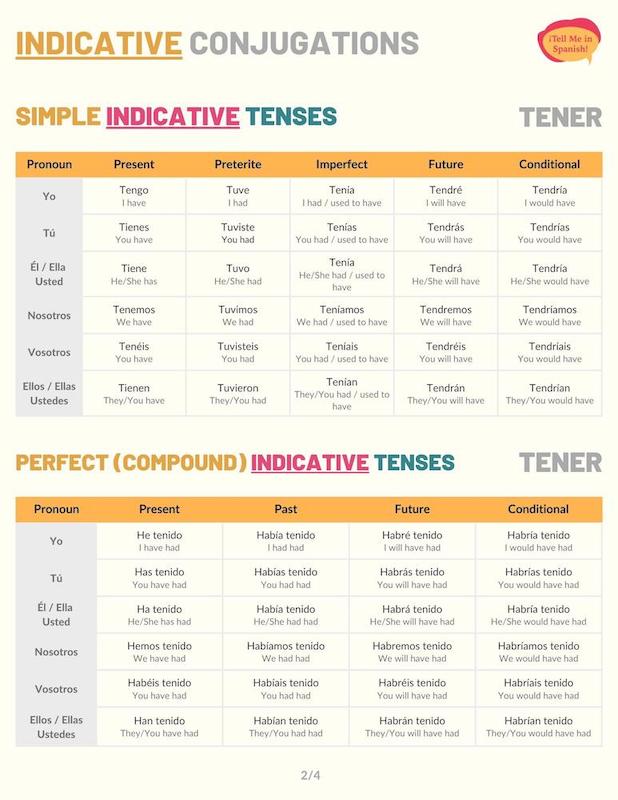
Memorizing all of these tenses for conjugating tener along with all of the verb’s stem changes and irregularities takes time. I’ve created a PDF for you to download containing all of the conjugation tables, verb characteristics, and uses so you can study it at your own pace!
Practice Quiz: Tener Conjugations
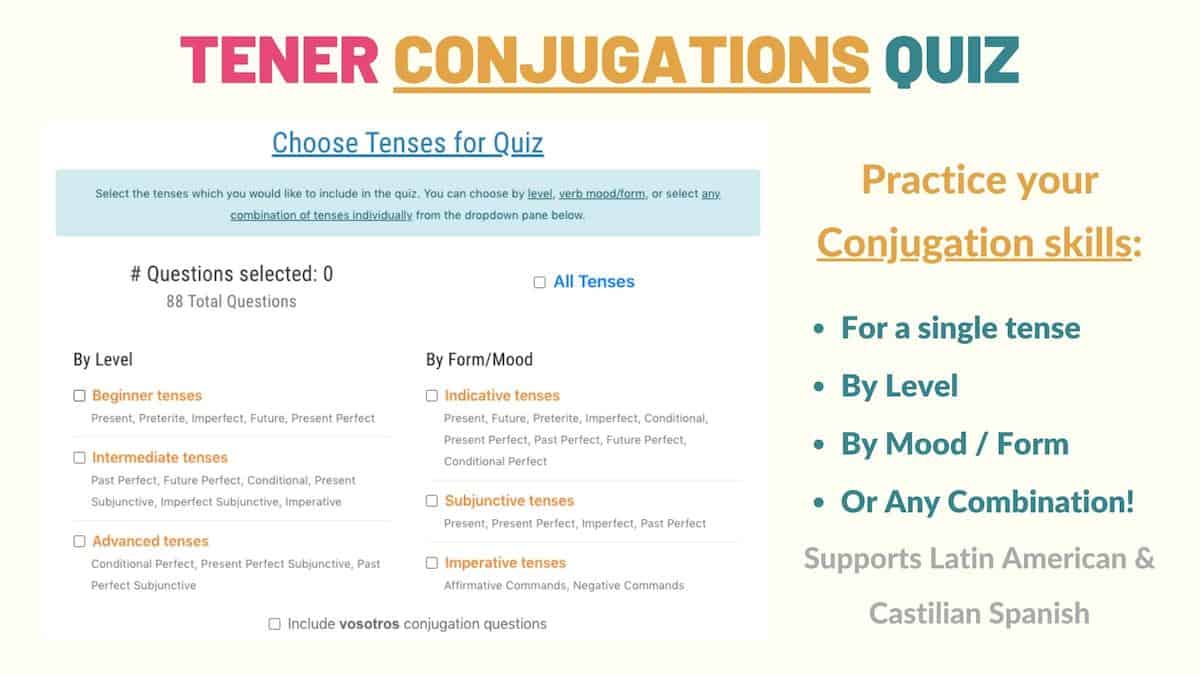
Now that you’ve learned all of these tenses, it’s time to put them into practice. Take the tener conjugation quiz to boost your conjugation skills and get instant feedback on which tenses you’ve mastered and those that need work.