Tomar is a basic verb that you’ll use in plenty of daily-life situations. Therefore, in this guide, you’ll learn the most common conjugations of ‘tomar’. Here is a summary of what we’ll cover:
- Tomar Overview
- Indicative Tenses of Tomar Conjugations
- Subjunctive Tenses of Tomar Conjugations
- Imperative (Commands) of Tomar Conjugations
- Uses & Examples
- Download Tomar Conjugation Tables & Uses Cheat sheets
- Tomar Conjugation Practice Quiz
Take Note: There are many tenses in Spanish. However, we don’t use them all. Many are simply old and outdated. As a result, in this guide, you’ll only learn the tenses you need to know to become fluent in Spanish.
Overview of Tomar
| Verb Characteristic | Property |
|---|---|
| Verb Type | ‘-AR’ |
| Irregular | No |
| Infinitive | Tomar |
| Gerund (Present Participle) Form | Tomando |
| Past Participle Form | Tomado |
| Synonyms | Agarrar, beber, coger (only Castilian Spanish) |
Depending on the sentence, tomar can be translated as ‘to take’, ‘to drink’, or ‘to have’. For simplicity, I’ll only use the one translation in the conjugation examples included in the tables below. You can check when to apply the other meanings in the Uses & Examples section.
Indicative Conjugations of Tomar
Present tense
In the present tense, tomar is used to talk about the things people take or drink. For example: siempre tomo el camión de las 7.
| Person | Conjugation | Translation |
|---|---|---|
| Yo | Tomo | I take |
| Tú | Tomas | You take |
| Él / Ella Usted | Toma | He/She takes You (formal) take |
| Nosotros | Tomamos | We take |
| Vosotros | Tomáis | You take |
| Ellos / Ellas Ustedes | Toman | They take You (plural) take |
Preterite tense
The preterite conjugations of tomar are regular. In the preterite tense, ‘tomar’ refers to things or medication people took or drinks they had at a specific moment in the past. For instance: ¿quién se tomó mi café?
| Person | Conjugation | Translation |
|---|---|---|
| Yo | Tomé | I took |
| Tú | Tomaste | You took |
| Él / Ella Usted | Tomó | He/She took You (formal) took |
| Nosotros | Tomamos | We took |
| Vosotros | Tomasteis | You took |
| Ellos / Ellas Ustedes | Tomaron | They took You (plural) took |
Imperfect tense
The imperfect tense of tomar describes the things you used to take or drink repeatedly or at an unspecified moment in the past. Mis hermanos tomaban un vaso de leche antes de dormir. The imperfect conjugations of ‘tomar’ can be translated as ‘used to take’ or ‘took’.
| Person | Conjugation | Translation |
|---|---|---|
| Yo | Tomaba | I took I used to take |
| Tú | Tomabas | You took You used to take |
| Él / Ella Usted | Tomaba | He/She took He/She used to take You (formal) took You (formal) used to take |
| Nosotros | Tomábamos | We took We used to take |
| Vosotros | Tomabais | You took You used to take |
| Ellos / Ellas Ustedes | Tomaban | They took They used to take You (plural) took You (plural) used to take |
Near future
The near or immediate future of tomar is used to talk about things you intend to take or drinks you want to have soon in the future. For example: apenas voy a tomar el camión. The near future is formed with ir (present) + a + tomar and can be translated as “going to take”.
| Person | Conjugation | Translation |
|---|---|---|
| Yo | Voy a tomar | I’m going to take |
| Tú | Vas a tomar | You’re going to take |
| Él / Ella Usted | Va a tomar | He/She is going to take You (formal) are going to take |
| Nosotros | Vamos a tomar | We’re going to take |
| Vosotros | Vais a tomar | You’re going to take |
| Ellos / Ellas Ustedes | Van a tomar | They’re going to take You (plural) are going to take |
Future simple tense
Tomar in the future tense expresses that someone will take something or will have a drink at some point in the future. Creo que tomaremos el siguiente tren.
| Person | Conjugation | Translation |
|---|---|---|
| Yo | Tomaré | I will take |
| Tú | Tomarás | You will take |
| Él / Ella Usted | Tomará | He/She will take You (formal) will take |
| Nosotros | Tomaremos | We will take |
| Vosotros | Tomaréis | You (formal) will take |
| Ellos / Ellas Ustedes | Tomarán | They will take You (plural) will take |
Conditional tense
The conditional forms of tomar allow you to express that someone would take or drink something if a given circumstance is fulfilled. For example: si yo fuera tú, no tomaría ese camión.
| Person | Conjugation | Translation |
|---|---|---|
| Yo | Tomaría | I would take |
| Tú | Tomarías | You would take |
| Él / Ella Usted | Tomaría | He/She would take You (formal) would take |
| Nosotros | Tomaríamos | We would take |
| Vosotros | Tomaríais | You would take |
| Ellos / Ellas Ustedes | Tomarían | They would take You (plural) would take |
Present perfect tense
When using the present perfect tense of ‘tomar’, you’re referring to things or drinks you have or haven’t taken. No nos hemos tomado la medicina. With this verb, the formula for the present perfect in Spanish is: ‘haber’ in the present tense + tomado.
| Person | Conjugation | Translation |
|---|---|---|
| Yo | He tomado | I have taken |
| Tú | Has tomado | You have taken |
| Él / Ella Usted | Ha tomado | He/She has taken You (formal) have taken |
| Nosotros | Hemos tomado | We have taken |
| Vosotros | Habéis tomado | You have taken |
| Ellos / Ellas Ustedes | Han tomado | They have taken You (plural) have taken |
Past perfect
The past perfect of ‘tomar’ allows you to explain that someone took something before some other reference point in the past. Cuando llegué, Jodie ya había tomado tu celular. The formula for conjugating to the past perfect tense is haber (imperfect form) + tomado (tomar’s past participle form).
| Person | Conjugation | Translation |
|---|---|---|
| Yo | Había tomado | I had taken |
| Tú | Habías tomado | You had taken |
| Él / Ella Usted | Había tomado | He/She had taken You (formal) had taken |
| Nosotros | Habíamos tomado | We had taken |
| Vosotros | Habíais tomado | You had taken |
| Ellos / Ellas Ustedes | Habían tomado | They had taken You (plural) had taken |
Future perfect
Tomar’s future perfect conjugations are formed by conjugating haber to the future tense and adding tomado (the past participle of ‘tomar’). With the future perfect, ‘tomar’ communicates that someone will take something by or before a certain time in the future. For example: a estas horas, Stephie ya habrá tomado su avión.
| Person | Conjugation | Translation |
|---|---|---|
| Yo | Habré tomado | I will have taken |
| Tú | Habrás tomado | You will have taken |
| Él / Ella Usted | Habrá tomado | He/She will have taken You (formal) will have taken |
| Nosotros | Habremos tomado | We will have taken |
| Vosotros | Habréis tomado | You will have taken |
| Ellos / Ellas Ustedes | Habrán tomado | They will have taken You (plural) will have taken |
Conditional perfect
The conditional perfect conjugations of ‘tomar’ are used to talk about things you would have taken if a past condition had been met. For instance, de haber podido, habríamos tomado el camión de las 9.
| Person | Conjugation | Translation |
|---|---|---|
| Yo | Habría tomado | I would have taken |
| Tú | Habrías tomado | You would have taken |
| Él / Ella Usted | Habría tomado | He/She would have taken You (formal) would have taken |
| Nosotros | Habríamos tomado | We would have taken |
| Vosotros | Habríais tomado | You would have taken |
| Ellos / Ellas Ustedes | Habrían tomado | They would have taken You (plural) would have taken |
Progressive tenses
The progressive tenses forms of ‘tomar’ are used to express that someone is taking something at the moment of speaking. For example: mamá, ¿qué estás tomando? The progressive tenses are formed with the structure: estar (conjugated) + gerund form of tomar (tomando).
| Progressive Tense | Formula | Translation Example |
|---|---|---|
| Present | Estar (present) + tomando | I am taking |
| Preterite | Estar (preterite) + tomando | You were taking |
| Imperfect | Estar (imperfect) + tomando | He was taking |
| Future | Estar (future) + tomando | We will be taking |
| Conditional | Estar (conditional) + tomando | They would be taking You (plural) would be taking |
Tomar Subjunctive Conjugations
In Spanish, the subjunctive is used to talk about wishes, hypothetical situations or express uncertainty. The conjugation charts below show the subjunctive forms of tomar.
Present subjunctive
Tomar to the present subjunctive allows you to express wishes, suggestions and expectations about what you want people to take. For instance: te sugiero que no tomes de esa botella.
| Person | Conjugation | Translation |
|---|---|---|
| Yo | Tome | I take |
| Tú | Tomes | You take |
| Él / Ella Usted | Tome | He/She takes You (formal) take |
| Nosotros | Tomemos | We take |
| Vosotros | Toméis | You take |
| Ellos / Ellas Ustedes | Tomen | They take You (plural) take |
Present perfect subjunctive
Haber in the present subjunctive + tomado is the structure you should use to build the present perfect subjunctive form of ‘tomar’. With this tense, ‘tomar’ implies uncertainty about the things people have taken. ¿Quién crees que haya tomado tu cartera?
| Person | Conjugation | Translation |
|---|---|---|
| Yo | Haya tomado | I have taken |
| Tú | Hayas tomado | You have taken |
| Él / Ella Usted | Haya tomado | He/She has taken You (formal) have taken |
| Nosotros | Hayamos tomado | We have taken |
| Vosotros | Hayáis tomado | You have taken |
| Ellos / Ellas Ustedes | Hayan tomado | They have taken You (plural) have taken |
Imperfect subjunctive
The imperfect subjunctive of ‘tomar’ can be used to talk about things we wished someone took or to express uncertainty in the past. ¿Qué suéter querías que tomara?
The imperfect subjunctive has two conjugation models depending on which type of Spanish you’re using:
Latin American Spanish version
| Person | Conjugation | Translation |
|---|---|---|
| Yo | Tomara | I took |
| Tú | Tomaras | You took |
| Él / Ella Usted | Tomara | He/She took You (formal) took |
| Nosotros | Tomáramos | We took |
| Ellos / Ellas Ustedes | Tomaran | They took You (plural) took |
Note: The table above doesn’t include the conjugation for vosotros because this pronoun is not used in Latin American Spanish.
Castilian Spanish version
| Person | Conjugation | Translation |
|---|---|---|
| Yo | Tomase | I took |
| Tú | Tomases | You took |
| Él / Ella Usted | Tomase | He/She took You (formal) took |
| Nosotros | Tomásemos | We took |
| Vosotros | Tomaseis | You took |
| Ellos / Ellas Ustedes | Tomasen | They took You (plural) took |
Past perfect subjunctive
In the past perfect subjunctive, tomar communicates that someone would have taken something if a past circumstance was met. These conjugations can also be used to talk about wishes or express regret about things you didn’t take. ¡No inventes, hubieras tomado otro camión!
| Person | Conjugation | Translation |
|---|---|---|
| Yo | Hubiera tomado | I had taken |
| Tú | Hubieras tomado | You had taken |
| Él / Ella Usted | Hubiera tomado | He/She had taken You (formal) had taken |
| Nosotros | Hubiéramos tomado | We had taken |
| Vosotros | Hubierais tomado | You had taken |
| Ellos / Ellas Ustedes | Hubieran tomado | They had taken You (plural) had taken |


Tomar Imperative Conjugations
The Spanish imperative mood is used to instruct people on what to do (affirmative imperative) and what not to do (negative imperative).
Affirmative commands
To order people to drink or take something, you must use the affirmative imperative of ‘tomar’. Tómate las pastillas.
| Person | Conjugation | Translation |
|---|---|---|
| Tú | Toma | Take |
| Usted | Tome | Take |
| Vosotros | Tomad | Take |
| Ustedes | Tomen | Take |
Negative commands
Use the negative imperative to tell people what not to take or drink. For example: no tomen las cosas de su hermana.
| Person | Conjugation | Translation |
|---|---|---|
| Tú | No tomes | Don’t take |
| Usted | No tome | Don’t take |
| Vosotros | No toméis | Don’t take |
| Ustedes | No tomen | Don’t take |
Meanings of Tomar & Examples
With the conjugations of tomar in mind, it’s time for you to learn the different applications of this verb.
- As a synonym of ‘to take’ or ‘to grab’
[Tomar conjugated] + [complement]
¿Quién tomó mis llaves?
Who took my keys?
¿Ya te has tomado el medicamento?
Have you taken the medicine already?
Ojalá te tomaras las cosas más en serio.
I wish you took things more seriously.
Tobey y James no tomaron la noticia muy bien.
Tobey and James didn’t take the news very well.
Take Note: Like ‘to take’, the verb tomar has multiple applications in Spanish. Some of the most common contexts where you can use this verb is when referring to grabbing objects, making decisions, taking the bus or meds.
- Referring to the activity of drinking
¿Qué desea tomar?
What do you wish to drink?
Cuando éramos niños, mi papá tomaba mucho.
When we were kids, dad used to drink a lot.
Perla no quiere que los niños tomen más agua.
Perla doesn’t want the kids to drink more water.
Download Tomar Conjugation Tables & Uses Cheat sheets
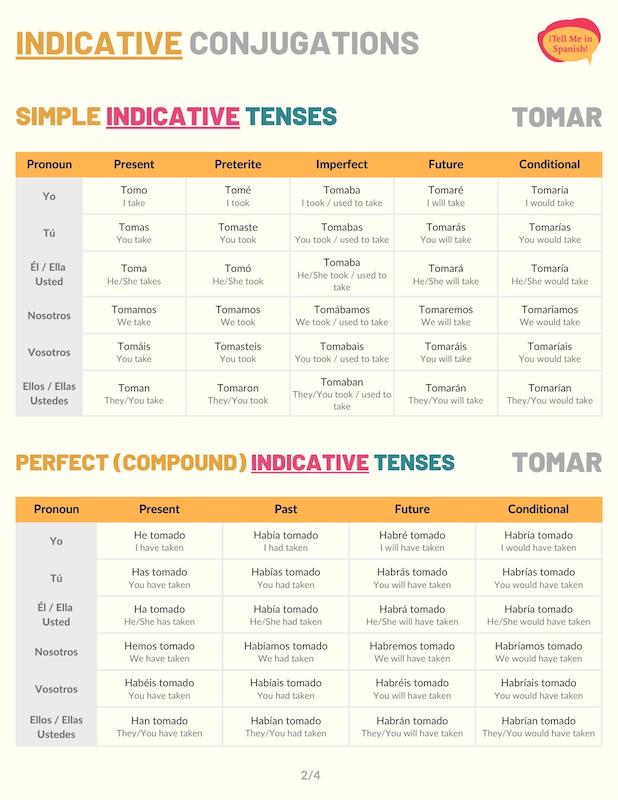
I’ve created a PDF for you to download containing all of the conjugation tables, verb characteristics, and uses so you can study it at your own pace!
Practice Quiz: Tomar Conjugation
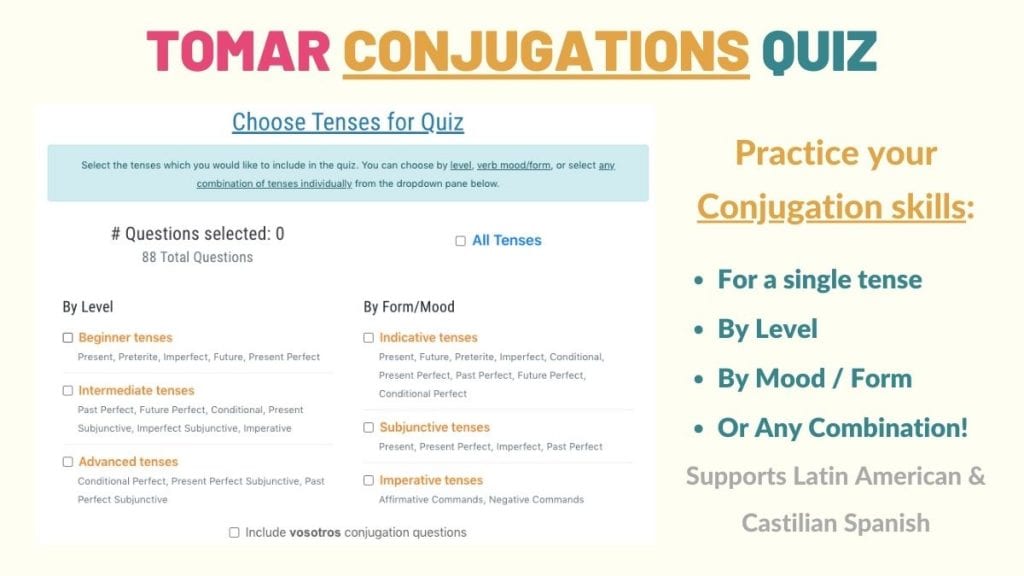
Take our ‘tomar’ conjugation practice quiz to put your skills to the test and expand your working knowledge of tenses with this verb.