If you’re learning how to conjugate verbs in Spanish, usar conjugation patterns can help you practice -AR regular verbs. Since this verb is also crucial for your communication, in this guide, we’ll go over:
- Usar Overview
- Indicative Tenses of Usar Conjugations
- Subjunctive Tenses of Usar Conjugations
- Imperative (Commands) of Usar Conjugations
- Uses & Examples
- Download Usar Conjugation Tables & Uses Cheat sheets
- Usar Conjugation Practice Quiz
Overview of Usar
| Verb Characteristic | Property |
|---|---|
| Verb Type | -AR |
| Irregular | No |
| Infinitive | Usar |
| Gerund (Present Participle) Form | Usando |
| Past Participle Form | Usado |
| Synonyms | Utilizar, ponerse, acostumbrar. |
Depending on the context, usar means ‘to use’, ‘to exercise’ or ‘to wear’. The usar conjugation charts below only have one translation to keep the tables as clear as possible. You can learn more about the meanings of ‘usar’ in the section Uses & Meanings.
Indicative Conjugations of Usar
Present tense
Usar conjugated to the Spanish present tense expresses what someone habitually uses. For example: Mi mamá usa mucho esta bicicleta.
| Person | Conjugation | Translation |
|---|---|---|
| Yo | Uso | I use |
| Tú | Usas | You use |
| Él / Ella Usted | Usa | He/She uses You (formal) use |
| Nosotros | Usamos | We use |
| Vosotros | Usáis | You use |
| Ellos / Ellas Ustedes | Usan | They use You (plural) use |
Preterite tense
Usar’s preterite conjugations refer to the things people used. Use adverbs of time to pinpoint the specific time when this action occurred. For instance: Gracias, siempre no usé tu computadora.
| Person | Conjugation | Translation |
|---|---|---|
| Yo | Usé | I used |
| Tú | Usaste | You used |
| Él / Ella Usted | Usó | He/She used You (formal) used |
| Nosotros | Usamos | We used |
| Vosotros | Usasteis | You used |
| Ellos / Ellas Ustedes | Usaron | They used You (plural) used |
Imperfect tense
Conjugate pensar to the imperfect tense in Spanish to talk about the things people used for an extended period of time in the past. For example: Martha siempre usaba la misma falda.
| Person | Conjugation | Translation |
|---|---|---|
| Yo | Usaba | I used I used to use |
| Tú | Usabas | You used You used to use |
| Él / Ella Usted | Usaba | He/She used He/She used to use You (formal) used You (formal) used to use |
| Nosotros | Usábamos | We used We used to use |
| Vosotros | Usabais | You used You used to use |
| Ellos / Ellas Ustedes | Usaban | They used They used to use You (plural) used You (plural) used to use |
Near future
Use ir in the present tense + a + usar to form the Spanish near future tense. We use this tense to say that someone will use something soon. For example: Mamá, ¿vas a usar el carro en la tarde?
| Person | Conjugation | Translation |
|---|---|---|
| Yo | Voy a usar | I’m going to use |
| Tú | Vas a usar | You’re going to use |
| Él / Ella Usted | Va a usar | He/She is going to use You (formal) are going to use |
| Nosotros | Vamos a usar | We’re going to use |
| Vosotros | Vais a usar | You’re going to use |
| Ellos / Ellas Ustedes | Van a usar | They’re going to use You (plural) are going to use |
Future simple tense
When conjugated to the future simple tense in Spanish, usar conveys that someone will use something at some point in the future. For instance: Si quieres agárrala, no la usaremos hoy.
| Person | Conjugation | Translation |
|---|---|---|
| Yo | Usaré | I will use |
| Tú | Usarás | You will use |
| Él / Ella Usted | Usará | He/She will use You (formal) will use |
| Nosotros | Usaremos | We will use |
| Vosotros | Usaréis | You (formal) will use |
| Ellos / Ellas Ustedes | Usarán | They will use You (plural) will use |
Conditional tense
The conditional forms of this verb allow you to say that someone would use something. These usar conjugations can help you build conditional or hypothetical sentences related to using something. For example: Si yo fuera tú, no usaría las cosas de Mariana.
| Person | Conjugation | Translation |
|---|---|---|
| Yo | Usaría | I would use |
| Tú | Usarías | You would use |
| Él / Ella Usted | Usaría | He/She would use You (formal) would use |
| Nosotros | Usaríamos | We would use |
| Vosotros | Usaríais | You would use |
| Ellos / Ellas Ustedes | Usarían | They would use You (plural) would use |
Present perfect tense
In Spanish, the present perfect tense is built with haber’s present tense conjugations + usado. You can use these conjugations to say whether someone has used something. For instance: Oigan, ¿ya han usado la nueva copiadora?
| Person | Conjugation | Translation |
|---|---|---|
| Yo | He usado | I have used |
| Tú | Has usado | You have used |
| Él / Ella Usted | Ha usado | He/She has used You (formal) have used |
| Nosotros | Hemos usado | We have used |
| Vosotros | Habéis usado | You have used |
| Ellos / Ellas Ustedes | Han usado | They have used You (plural) have used |
Past perfect
When conjugated to the past perfect tense, usar expresses that someone had used something before a past reference point. To form the Spanish past tense, use the imperfect forms of haber + the past participle of ‘usar’. Quebré mi celular nuevo y todavía no lo había usado.
| Person | Conjugation | Translation |
|---|---|---|
| Yo | Había usado | I had used |
| Tú | Habías usado | You had used |
| Él / Ella Usted | Había usado | He/She had used You (formal) had used |
| Nosotros | Habíamos usado | We had used |
| Vosotros | Habíais usado | You had used |
| Ellos / Ellas Ustedes | Habían usado | They had used You (plural) had used |
Future perfect
The usar future perfect conjugations communicate that someone will have used something by or before a point in the future. For instance: ¿Crees que Claudia ya habrá usado la blusa que le di?
| Person | Conjugation | Translation |
|---|---|---|
| Yo | Habré usado | I will have used |
| Tú | Habrás usado | You will have used |
| Él / Ella Usted | Habrá usado | He/She will have used You (formal) will have used |
| Nosotros | Habremos usado | We will have used |
| Vosotros | Habréis usado | You will have used |
| Ellos / Ellas Ustedes | Habrán usado | They will have used You (plural) will have used |
Conditional perfect
The conditional perfect forms of usar express that someone would have used something if a past circumstance occurred. For example: No habría usado tu carro si no hubiera sido una emergencia.
| Person | Conjugation | Translation |
|---|---|---|
| Yo | Habría usado | I would have used |
| Tú | Habrías usado | You would have used |
| Él / Ella Usted | Habría usado | He/She would have used You (formal) would have used |
| Nosotros | Habríamos usado | We would have used |
| Vosotros | Habríais usado | You would have used |
| Ellos / Ellas Ustedes | Habrían usado | They would have used You (plural) would have used |
Progressive tenses
Estar conjugations + usando (present participle form) is how you form the progressive tenses in Spanish. When using these tenses, you’re expressing that someone is using something at the moment of speaking. For example: ¿Quién está usando la estufa?
| Progressive Tense | Formula | Translation Example |
|---|---|---|
| Present | Estar (present) + usando | I am using |
| Preterite | Estar (preterite) + usando | You were using |
| Imperfect | Estar (imperfect) + usando | He was using |
| Future | Estar (future) + usando | We will be using |
| Conditional | Estar (conditional) + usando | They would be using |
Usar Subjunctive Conjugations
The subjunctive mood in Spanish communicates a person’s wishes, demands, hopes, requests, advice, uncertainty about something, or hypothetical situations. Below, we’ll review the usar conjugation tables for the most important subjunctive tenses.
Present subjunctive
Usar subjunctive conjugations are regular. You can use these forms to talk about wishes, suggestions, demands or suggestions about someone using something. For example: La maestra no quiere que usemos el celular en clase.
| Person | Conjugation | Translation |
|---|---|---|
| Yo | Use | I use |
| Tú | Uses | You use |
| Él / Ella Usted | Use | He/She uses You (formal) use |
| Nosotros | Usemos | We use |
| Vosotros | Uséis | You use |
| Ellos / Ellas Ustedes | Usen | They use You (plural) use |
Present perfect subjunctive
The perfect subjunctive conjugations of ‘usar’ are used to wonder or wish a person has already used something. This tense is formed with the present subjunctive forms of ‘haber’ + usado. For example: Dudo que hayan usado el programa que les pedí.
| Person | Conjugation | Translation |
|---|---|---|
| Yo | Haya usado | I have used |
| Tú | Hayas usado | You have used |
| Él / Ella Usted | Haya usado | He/She has used You (formal) have used |
| Nosotros | Hayamos usado | We have used |
| Vosotros | Hayáis usado | You have used |
| Ellos / Ellas Ustedes | Hayan usado | They have used You (plural) have used |
Imperfect subjunctive
Usar conjugated to the Spanish imperfect subjunctive tense communicates past hopes, wishes, requests, or suggestions someone had about a person using something. For example: Les dije que no usaran mis cosas.
Latin American and Castilian Spanish have their specific conjugation model for this tense:
Latin American Spanish version
| Person | Conjugation | Translation |
|---|---|---|
| Yo | Usara | I used |
| Tú | Usaras | You used |
| Él / Ella Usted | Usara | He/She used You (formal) used |
| Nosotros | Usáramos | We used |
| Ellos / Ellas Ustedes | Usaran | They used You (plural) used |
Note: Vosotros is not one of the subject pronouns used in Latin American Spanish. As a result, the previous usar conjugation for this pronoun isn’t included in the above chart.
Castilian Spanish version
| Person | Conjugation | Translation |
|---|---|---|
| Yo | Usase | I used |
| Tú | Usases | You used |
| Él / Ella Usted | Usase | He/She used You (formal) used |
| Nosotros | Usásemos | We used |
| Vosotros | Usaseis | You used |
| Ellos / Ellas Ustedes | Usasen | They used You (plural) used |
Past perfect subjunctive
In Spanish, the past perfect subjunctive conjugations of usar express that someone would have used something if a past action took place. These forms can also express regret or the hypothetical results if someone had used something.
For example: Te hubieras visto más bonita si hubieras usado la falda roja.
| Person | Conjugation | Translation |
|---|---|---|
| Yo | Hubiera usado | I had used |
| Tú | Hubieras usado | You had used |
| Él / Ella Usted | Hubiera usado | He/She had used You (formal) had used |
| Nosotros | Hubiéramos usado | We had used |
| Vosotros | Hubierais usado | You had used |
| Ellos / Ellas Ustedes | Hubieran usado | They had used You (plural) had used |


Usar Imperative Conjugations
To command people to use or not use something, you must conjugate usar to the imperative mood in Spanish.
Affirmative commands
In the affirmative imperative, usar is a regular verb. These forms allow you to order someone to use something. For example: Toma, usa esta pluma, por favor.
| Person | Conjugation | Translation |
|---|---|---|
| Tú | Usa | Use |
| Usted | Use | Use |
| Vosotros | Usad | Use |
| Ustedes | Usen | Use |
Negative commands
On the other hand, you can use the Spanish negative imperative forms to command people not to use something. ¡No usen el celular en clase!
| Person | Conjugation | Translation |
|---|---|---|
| Tú | No uses | Don’t use |
| Usted | No use | Don’t use |
| Vosotros | No uséis | Don’t use |
| Ustedes | No usen | Don’t use |
Meanings of Usar & Examples
Since you’ve just seen how to conjugate usar in Spanish, in this section, we’ll review the most common applications of this verb. Depending on the sentence, usar means to ‘use’ or ‘wear’:
[Usar conjugated] + [complement]
¿Qué vas a usar para la fiesta?
What are you going to wear for the party?
Dejé mi celular en la mesa y alguien lo usó.
I left my phone on the table and someone used it.
En México, no se usa el pronombre vosotros.
In Mexico, they don’t use the pronoun ‘vosotros’.
Take Note: If it’s clear what the thing someone uses is, you can replace it with a Spanish direct object pronoun. With this verb, it’s common to use sentences with passive voice with se (like example 3). These constructions refer to the things a large group of people use.
Download Usar Conjugation Charts & Uses Cheat sheet
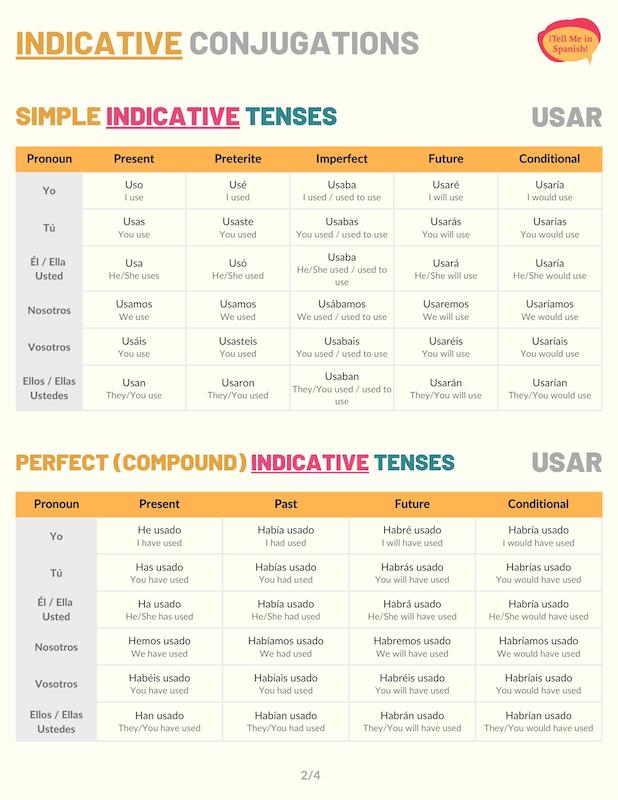
Usar is an important Spanish verb with a regular -AR conjugation pattern. You can find out how to conjugate this verb and its pattern by checking out the usar conjugation reference guide.
Practice Quiz: Usar Conjugation
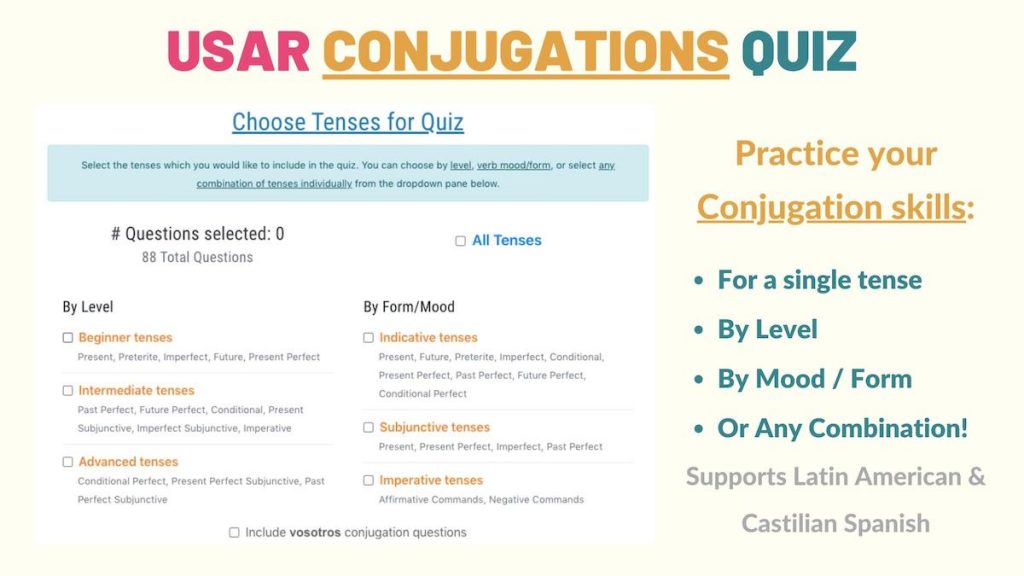
Now that know how to conjugate this verb, you should take this usar conjugation practice quiz.