
Despertarse has a reflexive conjugation in Spanish. Although they’re extremely common, reflexive verbs can be challenging if you’re not familiar with them. So, use this despertarse conjugation guide as a way to practice -AR reflexive verbs.
- Despertarse Overview
- Indicative Tenses of Despertarse Conjugations
- Subjunctive Tenses of Despertarse Conjugations
- Imperative (Commands) of Despertarse Conjugations
- Uses & Examples
- Download Despertarse Conjugation Tables & Uses Cheat sheets
- Despertarse Conjugation Practice Quiz
Overview of Despertarse
| Verb Characteristic | Property |
|---|---|
| Verb Type | -AR |
| Irregular | No |
| Infinitive | Despertarse |
| Gerund (Present Participle) Form | Despertando |
| Past Participle Form | Despertado |
| Synonyms | Levantarse. |
Stem Changes: E to IE
- Present indicative: despiert for all subject pronouns except ‘nosotros’ and ‘vosotros’.
- Present subjunctive: despiert for all subject pronouns except ‘nosotros’ and ‘vosotros’.
- Affirmative imperative: despiert for all subject pronouns except ‘vosotros’.
- Negative imperative: despiert for all subject pronouns except ‘vosotros’.
Despertarse is only reflexive when communicating that someone wakes themself up. Keep the same conjugations and remove the reflexive pronouns when saying the subject wakes someone else up.
Indicative Conjugations of Despertarse
Present tense
Despertarse present tense conjugations have an E to IE stem change for all subjects except ‘nosotros’ and ‘vosotros’. Use the present tense of ‘despertar’ to talk about someone’s current habits of waking up. For instance: Yo me despierto temprano.
| Person | Conjugation | Translation |
|---|---|---|
| Yo | Me despierto | I wake up |
| Tú | Te despiertas | You wake up |
| Él / Ella Usted | Se despierta | He/She wakes up You (formal) wake up |
| Nosotros | Nos despertamos | We wake up |
| Vosotros | Os despertáis | You wake up |
| Ellos / Ellas Ustedes | Se despiertan | They wake up You (plural) wake up |
Preterite tense
Despertarse preterite conjugations are regular. Conjugate despertarse to the preterite tense to communicate that someone already woke up or was awake at a specific moment in the past. ¿Sabes si ya se despertó tu hermano?
| Person | Conjugation | Translation |
|---|---|---|
| Yo | Me desperté | I woke up |
| Tú | Te despertaste | You woke up |
| Él / Ella Usted | Se despertó | He/She woke up You (formal) woke up |
| Nosotros | Nos despertamos | We woke up |
| Vosotros | Os despertasteis | You woke up |
| Ellos / Ellas Ustedes | Se despertaron | They woke up You (plural) woke up |
Imperfect tense
In the past indicative imperfect tense, despertarse is a regular verb. Use this tense to talk about the time you used to wake up. For example: Yo siempre me despertaba tarde.
| Person | Conjugation | Translation |
|---|---|---|
| Yo | Me despertaba | I woke up I used to wake up |
| Tú | Te despertabas | You woke up You used to wake up |
| Él / Ella Usted | Se despertaba | He/She woke up He/She used to wake up You (formal) woke up You (formal) used to wake up |
| Nosotros | Nos despertábamos | We woke up We used to wake up |
| Vosotros | Os despertabais | You woke up You used to wake up |
| Ellos / Ellas Ustedes | Se despertaban | They woke up They used to wake up You (plural) woke up You (plural) used to wake up |
Near future
The Spanish immediate future of ‘despertarse’ communicates that someone is planning to wake up soon in the future. For example: Sandy se va a despertar a las 9. The near future is formed with ir (present tense) + a + despertarse and can be translated as “going to wake up”.
| Person | Conjugation | Translation |
|---|---|---|
| Yo | Voy a despertarme | I’m going to wake up |
| Tú | Vas a despertarte | You’re going to wake up |
| Él / Ella Usted | Va a despertarse | He/She is going to wake up You (formal) are going to wake up |
| Nosotros | Vamos a despertarnos | We’re going to wake up |
| Vosotros | Vais a despertaros | You’re going to wake up |
| Ellos / Ellas Ustedes | Van a despertarse | They’re going to wake up You (plural) are going to wake up |
Take Note: You can attach the reflexive pronoun to the infinitive (despertar) or place it before the conjugated verb (ir). Regardless of which option you choose, you still need to use the corresponding reflexive pronoun for each subject.
Future simple tense
The future conjugations of despertarse are regular. In the future, you can use ‘despertarse’ to explain that someone will wake up at some point in the future. Mañana no nos despertaremos temprano.
| Person | Conjugation | Translation |
|---|---|---|
| Yo | Me despertaré | I will wake up |
| Tú | Te despertarás | You will wake up |
| Él / Ella Usted | Se despertará | He/She will wake up You (formal) will wake up |
| Nosotros | Nos despertaremos | We will wake up |
| Vosotros | Os despertaréis | You (formal) will wake up |
| Ellos / Ellas Ustedes | Se despertarán | They will wake up You (plural) will wake up |
Conditional tense
Use the conditional forms of ‘despertarse’ to express that a person would wake up if certain circumstances are met. This tense also allows you to make a hypothesis about someone waking up. ¿Por qué no se despertaría tu hermana?
| Person | Conjugation | Translation |
|---|---|---|
| Yo | Me despertaría | I would wake up |
| Tú | Te despertarías | You would wake up |
| Él / Ella Usted | Se despertaría | He/She would wake up You (formal) would wake up |
| Nosotros | Nos despertaríamos | We would wake up |
| Vosotros | Os despertaríais | You would wake up |
| Ellos / Ellas Ustedes | Se despertarían | They would wake up You (plural) would wake up |
Present perfect tense
Reflexive pronoun + haber in the present tense + despertado (past participle) is the formula of the Spanish present perfect tense. This tense is used to express that someone has or hasn’t woken up. For instance: ¿Por qué no se han despertado?
| Person | Conjugation | Translation |
|---|---|---|
| Yo | Me he despertado | I have woken up |
| Tú | Te has despertado | You have woken up |
| Él / Ella Usted | Se ha despertado | He/She has woken up You (formal) have woken up |
| Nosotros | Nos hemos despertado | We have woken up |
| Vosotros | Os habéis despertado | You have woken up |
| Ellos / Ellas Ustedes | Se han despertado | They have woken up You (plural) have woken up |
Take Note: With perfect tenses, Spanish reflexive pronouns must always be placed before haber.
Past perfect
The past perfect conjugations of ‘despertarse’ express that someone had or hadn’t woken up before some other reference point in the past. Eran las 8 y Juan no se había despertado. To form the past perfect, use the imperfect form of ‘haber’ and the past participle form of ‘despertarse’.
| Person | Conjugation | Translation |
|---|---|---|
| Yo | Me había despertado | I had woken up |
| Tú | Te habías despertado | You had woken up |
| Él / Ella Usted | Se había despertado | He/She had woken up You (formal) had woken up |
| Nosotros | Nos habíamos despertado | We had woken up |
| Vosotros | Os habíais despertado | You had woken up |
| Ellos / Ellas Ustedes | Se habían despertado | They had woken up You (plural) had woken up |
Future perfect
The future perfect conjugations of despertarse convey that someone will have or won’t have woken up by or before a certain time in the future. These forms are also used to express that something might have woken up. For instance: A las 9, mi mamá ya se habrá despertado.
| Person | Conjugation | Translation |
|---|---|---|
| Yo | Me habré despertado | I will have woken up |
| Tú | Te habrás despertado | You will have woken up |
| Él / Ella Usted | Se habrá despertado | He/She will have woken up You (formal) will have woken up |
| Nosotros | Nos habremos despertado | We will have woken up |
| Vosotros | Os habréis despertado | You will have woken up |
| Ellos / Ellas Ustedes | Se habrán despertado | They will have woken up You (plural) will have woken up |
Conditional perfect
The conditional perfect conjugations of despertarse are used to say that someone would have woken up as long as a past condition had been met. For instance: Me habría despertado temprano de haber tenido algo importante que hacer.
| Person | Conjugation | Translation |
|---|---|---|
| Yo | Me habría despertado | I would have woken up |
| Tú | Te habrías despertado | You would have woken up |
| Él / Ella Usted | Se habría despertado | He/She would have woken up You (formal) would have woken up |
| Nosotros | Nos habríamos despertado | We would have woken up |
| Vosotros | Os habríais despertado | You would have woken up |
| Ellos / Ellas Ustedes | Se habrían despertado | They would have woken up You (plural) would have woken up |
Progressive tenses
Use the progressive tenses of despertarse to express someone is waking up at the moment of speaking. Or, in the case of past forms, to communicate that a past action was in progress when you woke up. For example: Cuando llegaste, apenas me estaba despertando.
| Progressive Tense | Formula | Translation Example |
|---|---|---|
| Present | (Reflexive pronoun) + estar (present) + despertando | I am waking up |
| Preterite | (Reflexive pronoun) + estar (preterite) + despertando | You were waking up |
| Imperfect | (Reflexive pronoun) + estar (imperfect) + despertando | She was waking up |
| Future | (Reflexive pronoun) + estar (future) + despertando | We will be waking up |
| Conditional | (Reflexive pronoun) + estar (conditional) + despertando | They would be waking up |
Take Note: Reflexive pronouns can be attached to present participle verbs or can also be placed before the conjugated verb, which in this case would be estar.
Despertarse Subjunctive Conjugations
In Spanish, the subjunctive is used to talk about wishes, hypothetical situations or express uncertainty. The conjugation charts below show the subjunctive forms of despertarse.
Present subjunctive
Despertarse subjunctive conjugations have an E to IE stem change except for ‘nosotros’ and ‘vosotros’. The present subjunctive form of ‘despertarse’ can be used to wish or request someone to wake up. For instance: Espero que mañana se despierten temprano.
| Person | Conjugation | Translation |
|---|---|---|
| Yo | Me despierte | I wake up |
| Tú | Te despiertes | You wake up |
| Él / Ella Usted | Se despierte | He/She wakes up You (formal) wake up |
| Nosotros | Nos despertemos | We wake up |
| Vosotros | Os despertéis | You wake up |
| Ellos / Ellas Ustedes | Se despierten | They wake up |
Present perfect subjunctive
Reflexive pronoun + haber (in the present subjunctive) + despertado is the formula to build the present perfect subjunctive of ‘despertarse’. When using this tense, ‘despertarse’ can be used to express doubt or ask if someone has woken up. Dudo que Jared ya se haya despertado.
| Person | Conjugation | Translation |
|---|---|---|
| Yo | Me haya despertado | I have woken up |
| Tú | Te hayas despertado | You have woken up |
| Él / Ella Usted | Se haya despertado | He/She has woken up You (formal) have woken up |
| Nosotros | Nos hayamos despertado | We have woken up |
| Vosotros | Os hayáis despertado | You have woken up |
| Ellos / Ellas Ustedes | Se hayan despertado | They have woken up You (plural) have woken up |
Imperfect subjunctive
Use the imperfect subjunctive conjugations of ‘despertarse’ to refer to past suggestions, requests, wishes or expectations you had about someone waking up. Te pedí que te despertaras temprano.
The imperfect subjunctive has two conjugation models depending on which type of Spanish you’re using:
Latin American Spanish version
| Person | Conjugation | Translation |
|---|---|---|
| Yo | Me despertara | I woke up |
| Tú | Te despertaras | You woke up |
| Él / Ella Usted | Se despertara | He/She woke up You (formal) woke up |
| Nosotros | Nos despertáramos | We woke up |
| Ellos / Ellas Ustedes | Se despertaran | They woke up You (plural) woke up |
Note: The table above doesn’t include despertarse’s conjugation for vosotros because it’s not used in Latin American Spanish.
Castilian Spanish version
| Person | Conjugation | Translation |
|---|---|---|
| Yo | Me despertase | I woke up |
| Tú | Te despertases | You woke up |
| Él / Ella Usted | Se despertase | He/She woke up You (formal) woke up |
| Nosotros | Nos despertásemos | We woke up |
| Vosotros | Os despertaseis | You woke up |
| Ellos / Ellas Ustedes | Se despertasen | They woke up You (plural) woke up |
Past perfect subjunctive
In the past perfect subjunctive, despertarse conveys that someone would have woken up if a past circumstance was met. You can also use these conjugations to express regrets or hypothetical results if someone had woken up.
For example: Si se hubieran despertado, habríamos llegado a tiempo.
| Person | Conjugation | Translation |
|---|---|---|
| Yo | Me hubiera despertado | I had woken up |
| Tú | Te hubieras despertado | You had woken up |
| Él / Ella Usted | Se hubiera despertado | He/She had woken up You (formal) had woken up |
| Nosotros | Nos hubiéramos despertado | We had woken up |
| Vosotros | Os hubierais despertado | You had woken up |
| Ellos / Ellas Ustedes | Se hubieran despertado | They had woken up You (plural) had woken up |


Despertarse Imperative Conjugations
To give commands in Spanish, we use the imperative mood. Put it another way, it’s used to tell people what to do (affirmative imperative) and what not to do (negative imperative).
Affirmative commands
The affirmative imperative of ‘despertarse’ is used to command or instruct someone to wake up. For example: ¡Juan, despiértate! In the affirmative imperative, despertarse has E to IE changes except for ‘vosotros’.
| Person | Conjugation | Translation |
|---|---|---|
| Tú | Despiértate | Wake up |
| Usted | Despiértese | Wake up |
| Vosotros | Despertaos | Wake up |
| Ustedes | Despiértense | Wake up |
Take Note: Reflexive and object pronouns must always be attached to affirmative commands.
Negative commands
Use the negative imperative to order someone to not wake up. For example: No se despierten temprano. Notice that ‘vosotros’ is the only pronoun that doesn’t have an E to IE stem change.
| Person | Conjugation | Translation |
|---|---|---|
| Tú | No te despiertes | Don’t wake up |
| Usted | No se despierte | Don’t wake up |
| Vosotros | No os despertéis | Don’t wake up |
| Ustedes | No se despierten | Don’t wake up |
Take Note: With the negative imperative, reflexive pronouns must always be placed before the verb.
Meanings of Despertarse & Examples
Since you already learned how to conjugate despertarse, you should check the following examples so you know how to use this verb correctly.
In Spanish, we use the reflexive conjugations of despertarse to express that a person wakes up on their own. To keep this meaning, you must use reflexive pronouns:
Despiértense, por favor.
Wake up guys, please.
Todavía no me voy a despertar.
I’m not going to wake up just yet.
Siempre nos hemos despertado muy temprano.
We have always woken up very early.
You can use the non-reflexive form, despertar to express that someone is waking another person up. In this case, you must remove the reflexive pronoun from the conjugation:
Tim, despierta a tu hermana.
Tim, wake your sister up.
¿Quién despertó al bebé?
Who woke the baby up?
Take Note: With this meaning, you can use a Spanish direct object pronoun to replace the person that you or someone else wakes up –yo la desperté (I woke her up).
Download Despertarse Conjugation Tables & Uses Cheat sheets
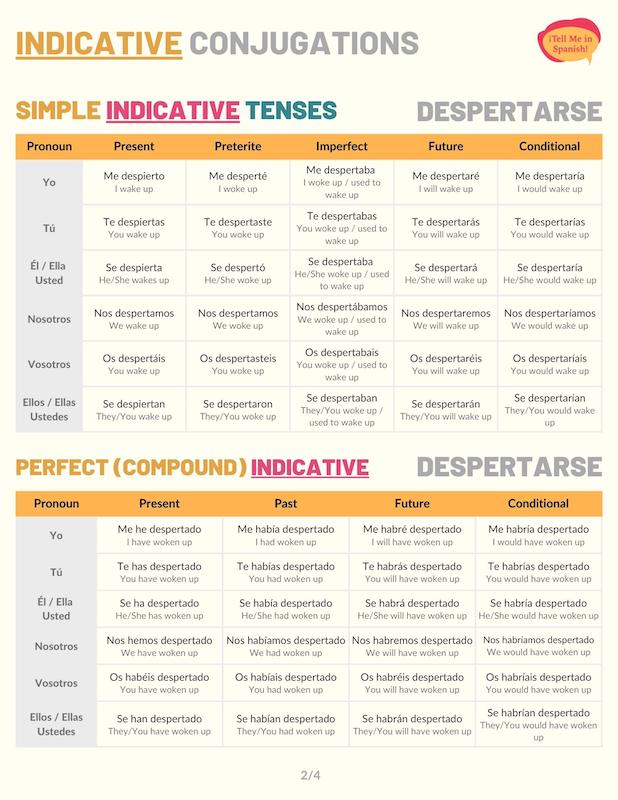
Click the button below to download the cheat sheets PDF I’ve assembled with all of the despertarse conjugation charts, meanings, and uses so you can study them at your own pace.
Practice Quiz: Despertarse Conjugation
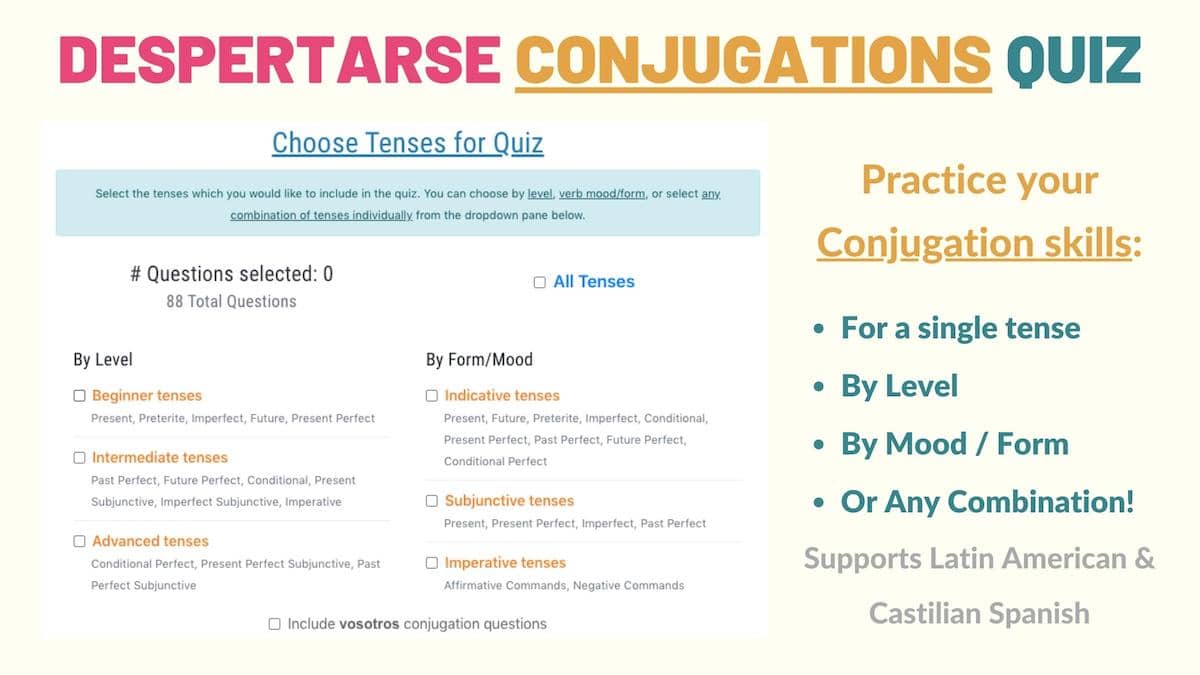
Now that you’ve learned how to conjugate despertarse in Spanish, you can practice your skills conjugating a reflexive, stem-changing verb with the despertarse conjugation practice quiz.